
This Content Is Only For Subscribers
Preventive maintenance looks different when you own three rental houses instead of three hundred apartments. A large property company may have an in house maintenance crew, spare equipment, and someone watching work orders all day. A small landlord usually has a day job, a handful of trusted vendors, and a budget that feels every major repair.
Welcome to Maintenance Matters. This column is for the independent landlord who needs a maintenance system that is realistic enough to keep using. The goal is not to eliminate repairs. Houses age, equipment fails, storms happen, and tenants call at inconvenient times. The goal is to reduce the number of surprises and catch more problems while they are still small.

The Reality of a Small Portfolio
When you only own a few houses, one repair can change the numbers for the entire year. A failed air conditioning system, major plumbing leak, roof problem, or foundation repair on one property is not spread across a hundred units. It lands directly on your cash flow. That is why preventive maintenance matters so much for the small operator.
The best maintenance systems are not complicated. They are repeatable. You need a seasonal calendar, a consistent way to inspect the houses, a short list of vendors you trust, and tenants who know what to report. If those four pieces are working, you are already ahead of most reactive landlords.
Building the Annual Maintenance Calendar
A preventive system starts with a calendar. Put the recurring tasks on it before the season arrives. DFW and North Texas have long cooling seasons, intense summer heat, severe thunderstorms, hail, high winds, dry stretches, and occasional hard freezes. Your calendar should reflect those conditions rather than using the same checklist every month.
Spring Preparation
Spring is the best time to prepare the air conditioning system before technicians become overloaded. Schedule the type of professional service appropriate for the equipment, clear debris around the condenser, confirm the filter size, and make sure condensate drainage is working. In North Texas, long run times make airflow and drainage both important. A clogged drain, restricted airflow, or poorly draining pan can create a water problem even when the system is still producing cold air.
Spring is also a good time to walk the exterior. Look at roof edges, flashing visible from the ground, fascia, siding, sealant, fencing, gutters, and drainage paths. Trim vegetation away from the house and outdoor equipment. Make sure downspouts discharge where intended and look for low areas that repeatedly collect water. Hail and severe thunderstorms will expose weak roof, fence, and drainage areas eventually, so spring is the time to correct the obvious ones before the busiest weather arrives.
Summer Stress
By midsummer, the house is under constant heat stress. HVAC calls become the obvious concern, but do not ignore irrigation, drainage, roof penetrations, exterior sealant, and soil conditions around the slab. Long dry periods can stress landscaping and expose irrigation problems, while a sudden severe thunderstorm can test the roof and drainage system in a matter of minutes. Keep drainage paths open and correct recurring ponding rather than waiting for the next storm.
Inside, pay close attention to condensate lines, drain pans, and signs of moisture near the air handler. If a tenant reports water near indoor HVAC equipment, treat it as a maintenance issue even if the system is still cooling. Look for staining around vents, damp material near the equipment, or repeated drain backups. Check attic access areas for obvious signs of roof leakage or pest activity when you are already there, but leave electrical, mold, and structural diagnosis to qualified professionals.
Small leaks often show up gradually. A cabinet may swell before water is obvious, and mineral deposits around a fitting can distract from a slow seep. During routine visits, look for staining, soft material, rust, corrosion, or changes around supply connections, toilets, tubs, showers, and water heaters. The goal is not to label every mark as a major problem. It is to investigate recurring moisture before it becomes a larger repair.

Fall Recovery
When the worst heat begins to ease, use fall to catch what summer and severe weather exposed. Look for cracked exterior sealant, damaged screens, fence movement, sun worn paint, roof concerns after hail or wind, stressed landscaping, irrigation leaks, and temporary repairs that were made during the busiest part of the year. This is also a good time to review the repair log and see whether one property is generating the same drainage, HVAC, fence, or exterior call again and again.
Clean gutters where the property has them and check downspout discharge. North Texas storms can drop a lot of water quickly, and many properties also go through long dry stretches. Keeping roof water moving away from the house and correcting recurring ponding matters more than making the yard look perfect. If you see erosion, standing water near the house, a downspout emptying against the slab, or drainage repeatedly moving toward an exterior wall, put it on the correction list before the next storm.
Winter Readiness
North Texas winters are often manageable, but hard freezes still happen. Do not wait for the forecast to turn urgent before figuring out where the shutoff valve is. Make sure the tenant knows its location and that the valve is accessible. Protect exposed plumbing as appropriate for the property and climate, and give tenants clear freeze instructions before cold weather arrives.
This is also a good time to check exterior hose connections, damaged pipe insulation, and vacant property procedures. A vacant rental can be more vulnerable during a freeze because no one is there to notice a small leak or loss of heat. The same is true after a hailstorm or severe wind event. If a house is between tenants, add it to your weather check routine rather than assuming an empty house can wait until the next turnover visit.
Use Regular Walkthroughs
A seasonal calendar works better when you pair it with regular property visits. Quarterly is a useful target for some landlords, while others may use a different schedule based on the lease, property condition, and how often they are already on site. The important part is consistency and proper notice before entry.
During a walkthrough, look for the quiet problems tenants may not report. Open sink cabinets and check for staining or swelling. Look at tub and shower caulk. Check around toilets and water heaters for moisture. Look at filters, visible drain pans, ceilings, window areas, and exterior doors. Take a few photos so you have something to compare next time.
Smoke alarms should also be part of your normal property safety process. Follow Texas requirements and the manufacturer’s instructions for the devices installed in the home. Do not assume every detector or battery follows the same replacement schedule. If a device is damaged, missing, expired, or not functioning as expected, correct the issue promptly.
Make the Tenant Part of the System
You cannot see the property every day, so the tenant is an important part of preventive maintenance. At move in, show them how to submit a repair request and what deserves immediate attention. Point out the main water shutoff, the breaker panel, the HVAC filter location if they are expected to handle filters, and any property specific items they need to know.
Explain that you want to hear about small leaks, ceiling stains, toilets that keep running, unusual electrical smells, water near the HVAC equipment, doors that suddenly stop lining up, new cracks that change, and drainage that behaves differently after a storm. A tenant should not be asked to diagnose the cause. Their job is to notice the change and report it.
Clear communication also helps with routine responsibilities. If the lease assigns lawn care, filter changes, pest control, or another task to the tenant, explain the expectation at move in instead of waiting for a problem. Then document the conversation and provide simple written instructions.
Build a Vendor Bench Before the Emergency
Prevention does not mean you will never need an emergency repair. It means you should know who you are calling before it happens. Keep at least one reliable contact for HVAC, plumbing, electrical, roofing, fencing, and general repairs. If your properties are spread between Dallas, Fort Worth, Arlington, Plano, Frisco, McKinney, Denton, or other parts of North Texas, confirm which areas each vendor actually serves and whether travel charges apply.
A second option for the most important trades is useful during heat waves and storm recovery, when good vendors can be booked for days. After a widespread hail or wind event, the best roofer, fence contractor, or HVAC company may simply have more calls than it can handle quickly. Keep license and insurance information where appropriate, along with notes about pricing, communication, service area, and the type of work each vendor handled well.
Do Not Forget the Small Recurring Items
Preventive maintenance is not only about major systems. Small recurring items deserve a place on the calendar too. Filters, exterior sealant, clogged drains, pest entry points, loose fence boards, damaged weather stripping, irrigation leaks, and blocked roof or yard drainage are inexpensive compared with the damage they can cause when ignored. Group several small tasks into one scheduled visit so you are not driving across the Metroplex for every minor item.
Vacant houses need their own routine. During a turnover, check for active leaks, confirm the HVAC is operating appropriately for the season, verify that exterior doors and windows are secure, and walk the property after major storms or freezes. A house with no tenant has no one inside to notice a ceiling stain, running toilet, tripped breaker, HVAC drain backup, roof leak, fence damage, or water collecting near an exterior wall.
Track What the House Is Telling You
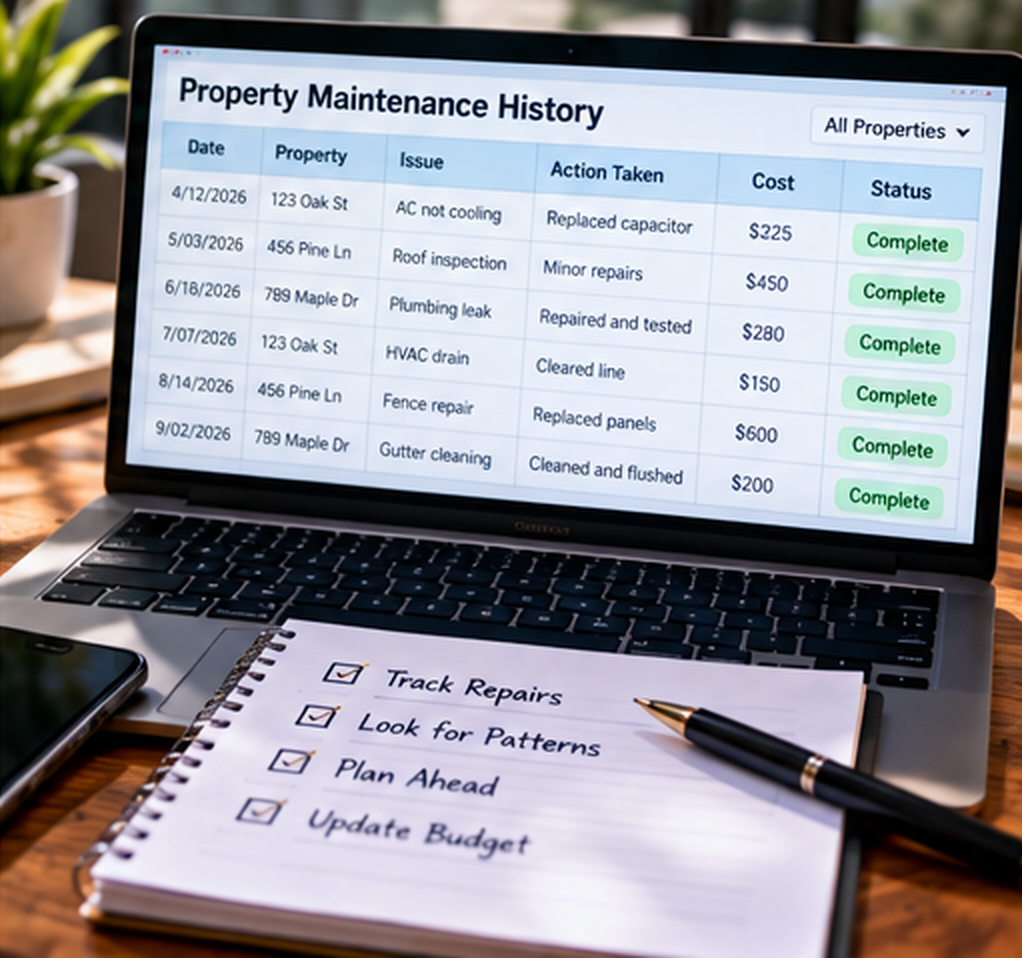
A preventive maintenance system should get smarter over time. Keep a simple maintenance history for each house. If the same drain clogs every six months, the same crack changes after dry periods, the same yard area holds water after storms, or the same air conditioning unit needs repeated service, stop treating each event as unrelated. Repetition is information.
The record also helps with budgeting. An older HVAC system with repeated repair calls, a roof with recurring leak or hail history, a drainage correction that keeps getting postponed, a fence that needs another patch, or an irrigation system that repeatedly fails may be telling you to plan for replacement or larger work. Scheduled capital work is easier to manage than an emergency purchase made during a heat wave or immediately after a storm.
A System You Can Actually Keep
The best preventive maintenance plan is the one you will still use a year from now. Put seasonal tasks on the calendar, visit the houses consistently, train tenants to report changes, and keep a reliable vendor list and property history. For a small DFW or North Texas landlord, those habits make repairs easier to manage and reduce surprises.