This Content Is Only For Subscribers
Landlords often hear that they should keep better records and picture a filing system designed for a law office. That is not necessary. A landlord with a few houses needs a system that is simple enough to use every week and organized enough to answer a question months later.
The point is not to save every casual message forever. The point is to preserve the records that explain what was agreed, what notice was given, what repair was reported, what access was requested, and what happened next.
Use One Main Communication Channel
The easiest system is to choose one primary channel for substantive tenant communication. Email or a property management portal works well because the messages are searchable and already carry dates and times. Text can also be useful, especially for scheduling, but important text conversations should be preserved rather than left only on a phone that may be replaced.
For a DFW or North Texas landlord managing a few houses, the rule can be simple. If the conversation affects rent, repairs, entry, a lease rule, renewal, move out, or money owed, make sure it ends up in the permanent tenant record. If a phone call covers something important, send a short written recap afterward.
Save the Records That Tell the Story
Maintenance records should run from the tenant’s initial report through completion. Save the request, your acknowledgment, vendor scheduling, delay updates, the invoice, and any completion message. If an air conditioner fails during a hot week or a plumbing repair requires a second visit, that sequence shows what the landlord actually did and when.
Entry records should show the date, purpose, expected window, and any tenant response. Payment arrangements should include the written terms. Lease violations should include the notice, supporting photos or messages when relevant, and the follow up. Move in and move out records should include condition documentation and photographs that can be matched to the property and date.
Formal Notices Need More Than a Screenshot
Do not confuse general communication records with proof that a formal notice was properly delivered. Some notices have statutory or lease specific delivery rules. Keep a copy of the notice and the proof associated with the delivery method you actually used. A sent email, screenshot, or text may be useful evidence, but it is not automatically a substitute for a delivery method required by law or the lease.
This point is especially important with eviction related notices because Texas law changed in 2026. Current Section 24.005 includes specific notice and delivery rules. Use the current statute and the lease rather than relying on an old form or an old habit.
How Long Should You Keep It?
Four years after a tenancy ends is a useful practical baseline for many ordinary Texas contract and debt disputes, but it is not a universal destruction date. Some records should be kept longer because tax, insurance, property basis, federal lead disclosure, warranty, or unresolved claim rules can involve different retention periods.
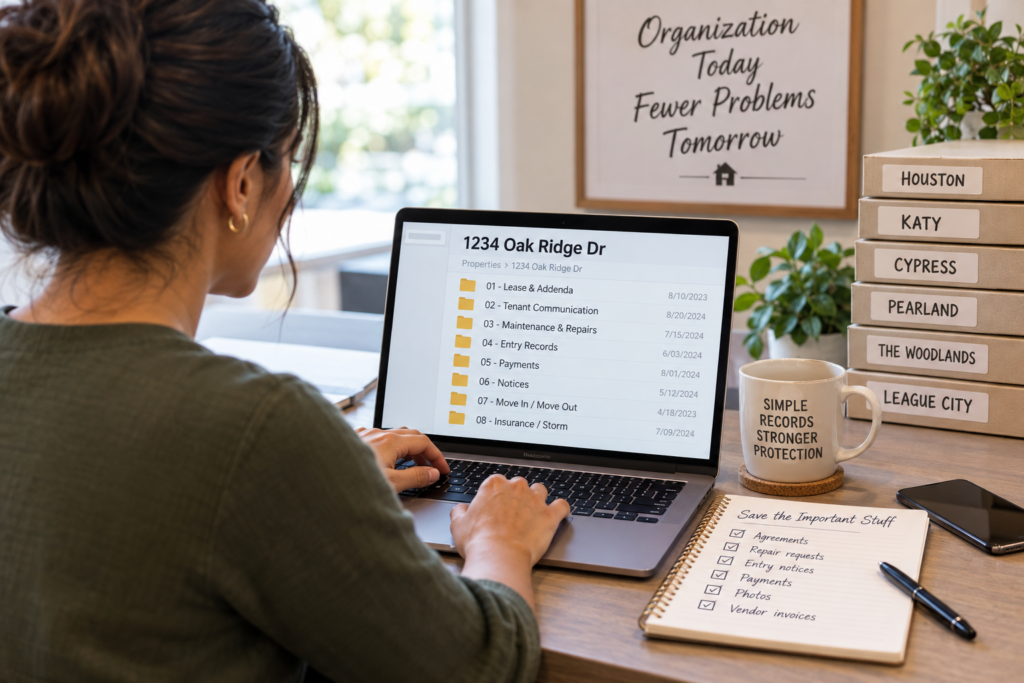
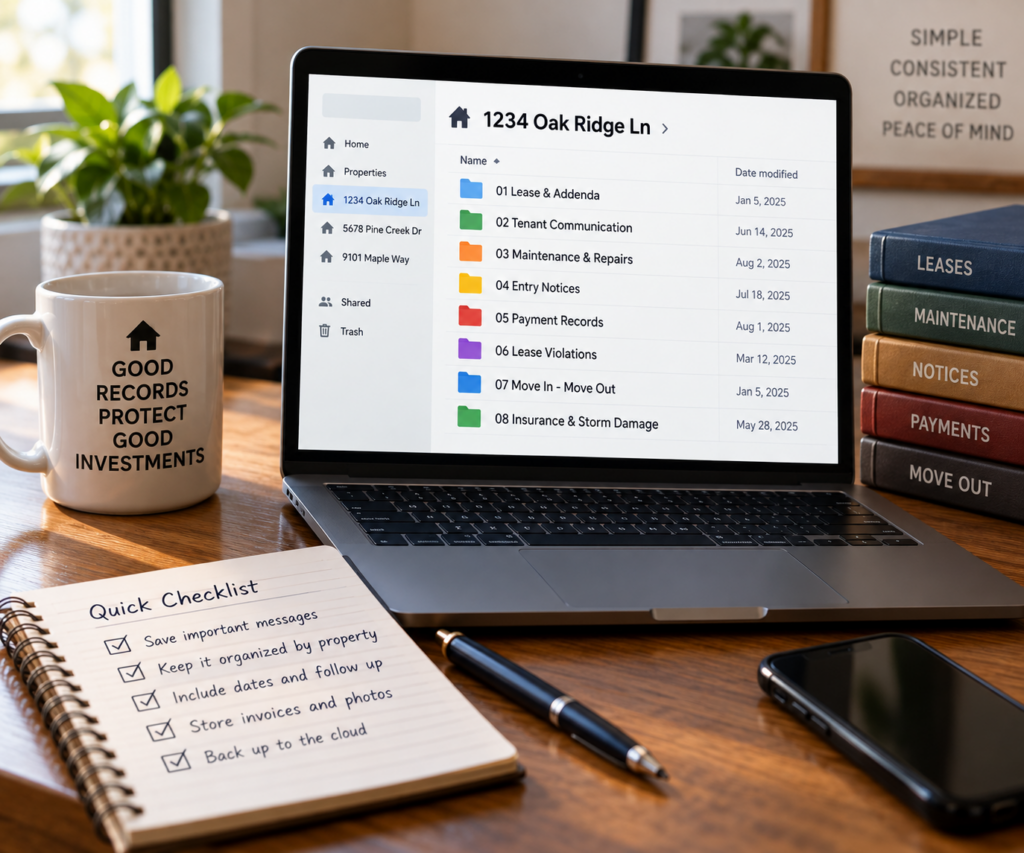
A simple cloud folder by property address works well. Inside it, keep the lease, tenant communication, maintenance, notices, move in and move out documentation, and financial records. If you manage rentals in Dallas, Fort Worth, Arlington, Plano, Frisco, McKinney, Denton, or farther into the surrounding counties, the system should look the same for each house. Consistency matters more than fancy software.
Backups matter too. Hail, high winds, freeze damage, insurance claims, and major repairs can produce records that are useful long after the tenant conversation ends. If a storm damages a roof, a fence is blown down, or a frozen pipe affects flooring, keep the tenant messages with the photos, vendor invoices, insurance correspondence, and repair completion records for that property. Do not leave the only copy of an important conversation on one phone. Export or preserve records in a format you can still open later. A basic cloud folder with a second backup is enough for most small landlords, provided the files are named clearly and tied to the correct property and tenancy.
Keep It Simple Enough to Use
A recordkeeping system only protects you if you actually use it. Pick a process that takes a few minutes, not an afternoon. Save the important exchange when it happens, name the file so you can find it later, and keep the property record together. Good documentation is usually boring. That is one of its best qualities.