
This Content Is Only For Subscribers
Automation can be useful for a small landlord, but tenants can tell when every message sounds like it came from a billing system. The goal is not to automate every conversation. It is to automate the reminders you would otherwise have to send over and over, while keeping the message clear enough that it still sounds like it came from a person managing a real house.
The best reminders are predictable, useful, and tied to something the tenant can actually do. A reminder about an upcoming inspection, a filter change, a scheduled vendor visit, or a storm preparation step can save a lot of back and forth. A stream of generic messages that arrives every week will eventually become background noise.
Automate Repetition, Not Judgment
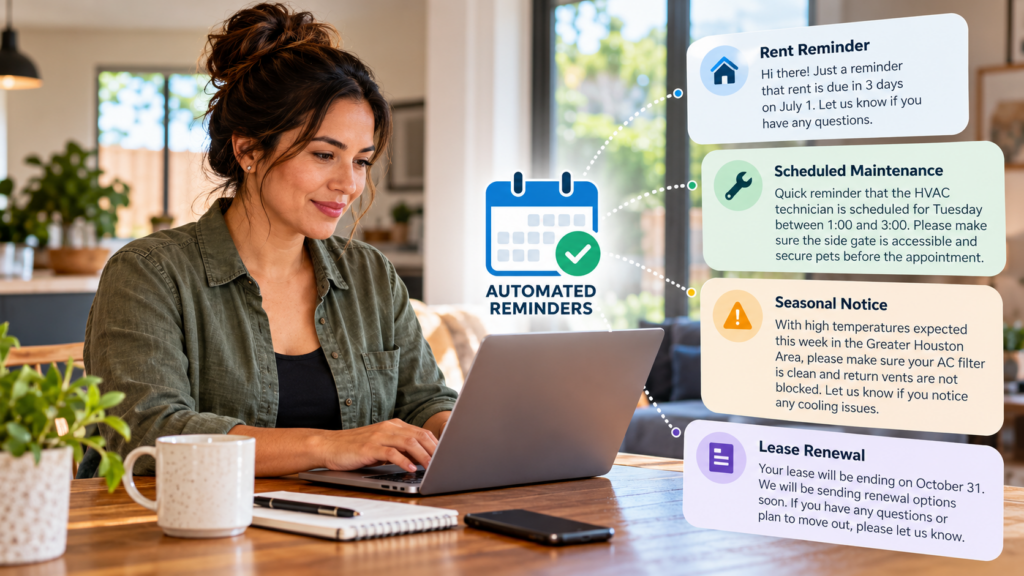
I would automate the tasks that happen on a schedule and do not require a decision. Rent reminders, recurring filter reminders, renewal check ins, inspection reminders, and scheduled maintenance notices are good examples. Whether a tenant complaint is urgent, whether a repair needs a specific vendor, or whether a lease exception makes sense still requires a person.
That distinction matters in DFW and North Texas because maintenance conditions can change quickly. A reminder to replace an HVAC filter every so often is easy to automate. A tenant saying the house is not cooling during a dangerous heat stretch, that a pipe has started leaking after a hard freeze, or that water is entering after storm damage is not something that should disappear into an automated queue. The system can confirm receipt, but the landlord still needs to review the situation.
Write the Message Like You Would Actually Say It
A good automated reminder should sound like a short note you would be comfortable sending yourself. Skip corporate language. Tell the tenant what is happening, when it is happening, and whether they need to do anything.
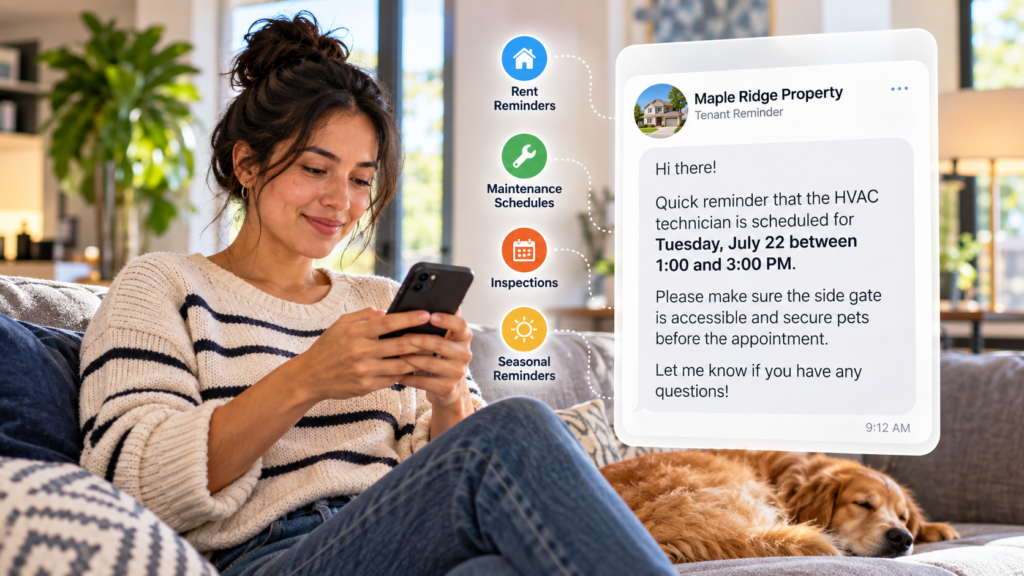
Instead of saying, This is an automated notification regarding your upcoming property service event, say, Quick reminder that the HVAC technician is scheduled for Tuesday between 1:00 and 3:00. Please make sure the side gate is accessible and secure pets before the appointment.
The second version is still automated, but it is useful. It gives the tenant a time window and a clear action. That is what makes automation feel helpful instead of impersonal.
Use Local Reminders Where They Actually Help
Seasonal reminders can be especially useful in DFW and North Texas. Before a long heat stretch, you may remind tenants how to report cooling problems and to avoid blocking return vents. Before severe thunderstorms, you may send property specific instructions about outdoor items, gates, or how to report visible storm damage. Before a hard freeze, you may send the cold weather instructions that apply to that particular house and explain how to report a leak quickly if one appears.
The key is to keep the reminder connected to the property. If one house has no irrigation system, do not send that tenant an irrigation reminder. If another house has a specific filter size, gate procedure, freeze preparation step, or storm concern, build that information into the reminder for that property instead of broadcasting a generic message to everyone.
Do Not Automate Too Many Touches
Every automation should earn its place. If a tenant gets a rent reminder five days before rent, three days before rent, the day before rent, the morning rent is due, and again that evening, the system is not helping anymore. It is training the tenant to ignore you.
I would rather send fewer reminders at useful moments. One clear message before a scheduled visit is better than three vague ones. One renewal reminder with the next step is better than a series of messages that never explain what the tenant needs to decide.
Leave Room for a Real Reply
Automated messages should not feel like a dead end. If the tenant has a question, they should know where to respond. If your reminder comes from a system that is not monitored, say where the tenant should send a reply. If the tenant responds with new information, stop relying on the automation and handle the conversation normally.
Automation is useful because it protects your attention from repetitive work. It should not remove you from the moments that need judgment. For a small DFW and North Texas portfolio, a handful of well written reminders can keep inspections, maintenance, renewals, and seasonal tasks moving without making tenants feel like they are communicating with a machine.