Home Blog Page 16

The Repair Request Form Every Landlord Should Use

0

Small landlords often receive repair requests in whatever way is easiest for the tenant. One tenant sends a text. Another leaves a voicemail. Someone else mentions it while you are already at the house. That flexibility feels harmless until you are trying to remember which bathroom had the slow leak, whether the tenant said the ceiling stain was growing, or whether the plumber was allowed to enter while the tenant was at work.

A simple repair request form fixes most of that confusion. It gives the tenant one clear place to describe the problem and gives you enough information to decide what happens next. For a landlord with a few houses across DFW and North Texas, it just needs to capture the details you would otherwise spend the next hour asking for one message at a time.
Start With the Basics

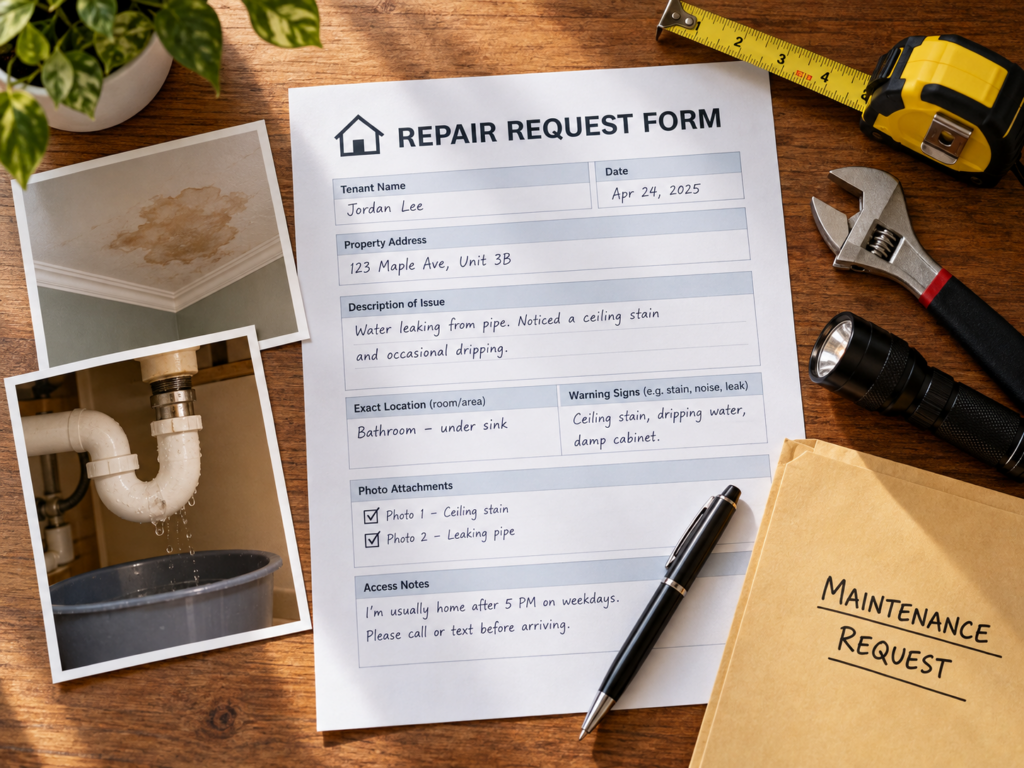
Every request should include the tenant name, property address, date of submission, and a plain description of what is happening. Ask the tenant to describe what they see, hear, smell, or feel instead of trying to diagnose the repair. A message that says the kitchen sink drains slowly, gurgles, and smells like sewage gives a plumber much more useful information than a message that says the sink is broken.

Add a field for the exact location inside or outside the house. Kitchen, hall bathroom, garage, back patio, attic access area, and outdoor condenser are all more useful than simply writing plumbing or air conditioning. If you own several houses, this small detail can prevent a vendor from walking into the wrong room and asking the tenant to explain the whole problem again.

Ask About Related Warning Signs

One of the most useful questions on the form is whether the tenant has noticed anything else connected to the problem. Water stains, unusual sounds, burning smells, repeated breaker trips, warm air from the vents, standing water near indoor HVAC equipment, or a toilet that keeps running can change how quickly you need to respond.

This matters in DFW and North Texas because heat, storms, and sudden temperature swings can change how quickly a repair needs attention. A weak air conditioning complaint in May may be a routine service call. The same complaint during a stretch of triple digit heat deserves a faster look. A small drip under a sink may be manageable for a short period, but a cabinet floor that is swelling, water near electrical equipment, or a leak that started after a hard freeze can point to a problem that should not sit.

Use Photos to Save a Trip

Give the tenant an easy way to attach photos. A picture of a leaking supply line, damaged fence, ceiling stain after hail or wind driven rain, thermostat display, irrigation leak, or water around indoor HVAC equipment can help you send the right trade the first time. Photos are especially helpful when a vendor is traveling between Dallas, Fort Worth, Arlington, Plano, Frisco, McKinney, Denton, or another surrounding community and a second trip means another service charge and another day of delay.

Photos are not a substitute for a qualified diagnosis. They are simply a better starting point. They can help you tell the difference between a loose handle and a broken valve, or between an old ceiling stain and new damage that appeared after a severe storm.

Include Access and Scheduling Information

The form should also ask when the tenant is normally available and whether they have any access instructions you need to know before scheduling. A dog in the yard, a locked side gate, a home office call schedule, or a tenant who works nights can turn a simple service visit into a wasted trip if the vendor does not know about it.

You can also ask whether the tenant is comfortable with a vendor entering when they are not home. That helps with scheduling, but the lease and applicable law still control entry and notice. The form is there to organize the visit.

Make the Form the Primary Channel

For most small landlords, a simple online form, dedicated maintenance email, or property management portal works well. Put the link in the move in information and keep it easy to find. When a tenant sends a routine repair by text, you can respond with the link and ask them to submit it so the details stay together.

Use some common sense with emergencies. If a tenant calls because water is actively flooding the house, do not make them stop and complete a form before you act. Handle the immediate problem first, then create the written record yourself or have the tenant submit the details once the situation is stable. The system should make maintenance easier, not get in the way of protecting the property.
A Better Maintenance Record

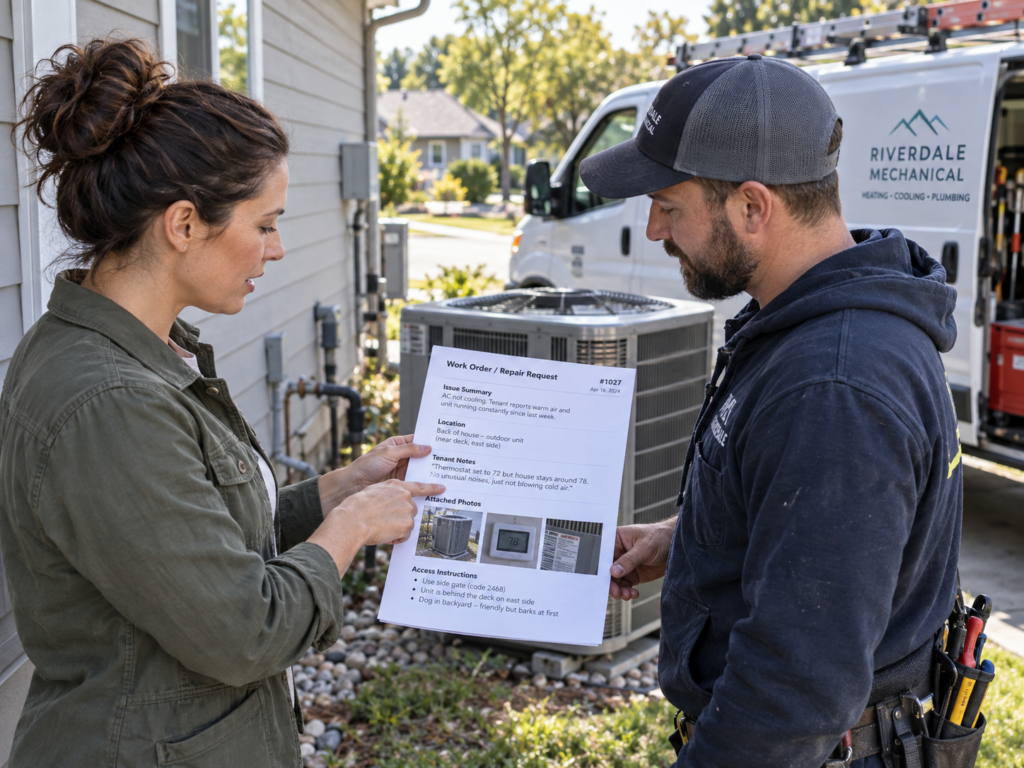
The biggest benefit is consistency. You know when the issue was reported, what the tenant observed, which property is involved, what photos were supplied, and what access issues may affect the visit. From there, you can add the vendor, appointment date, invoice, and final tenant confirmation to the same record.

That gives a small landlord something much more useful than a phone full of scattered messages. It gives you a history of the house. Over time, that history starts showing patterns, such as repeated summer cooling problems, irrigation leaks, roof or fence damage after storms, freeze related plumbing trouble, or an appliance that keeps generating service calls. A good form does not repair the house for you. It simply makes it much harder for an important detail to disappear.


When Should a Landlord Put It in Writing?

0

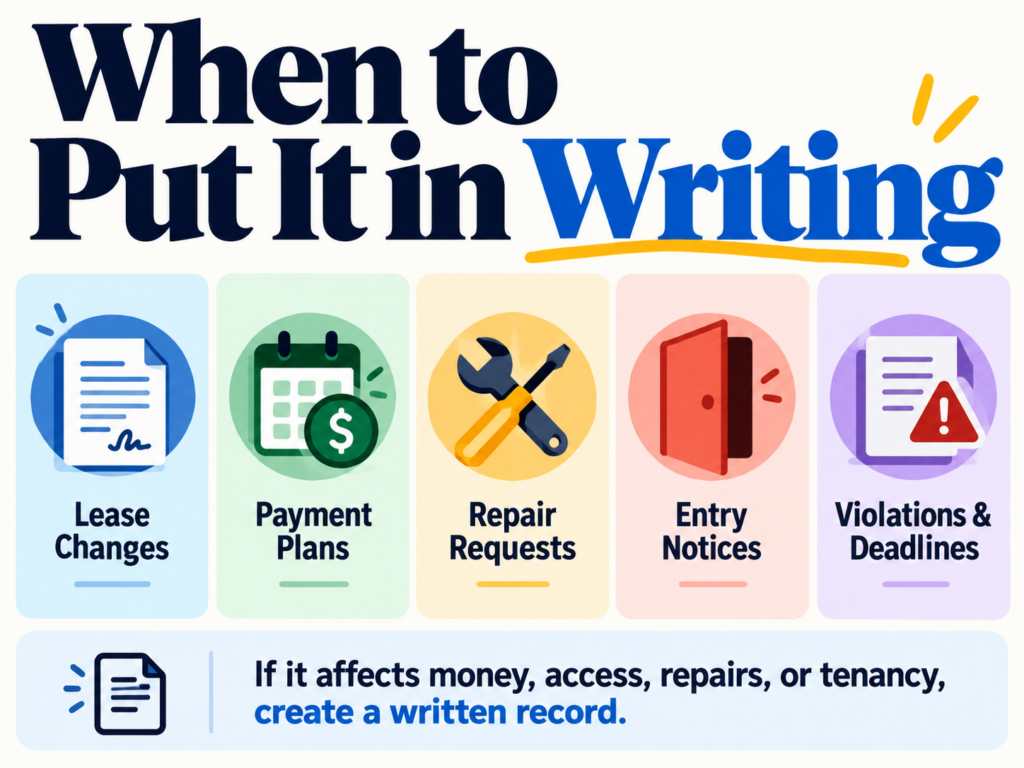
A good Texas landlord does not need to turn every conversation into a legal memo. But there are plenty of moments when a quick verbal agreement is not enough. The practical question is not whether every message must be formal. It is whether the subject could affect money, access to the property, a lease obligation, a repair dispute, or the status of the tenancy. When the answer is yes, a written record is usually worth the extra minute.

That matters for landlords across DFW and North Texas because many day to day issues start casually. A tenant in Frisco calls about an air conditioner in August. A roofer needs access in Plano after a hailstorm. A tenant in Arlington asks to pay part of the rent now and the balance next Friday. None of those conversations need to become confrontational. They do need to be documented correctly.

Start With What the Lease and the Law Actually Require

Some communications have specific legal or lease requirements. Others do not. The safest habit is to separate those two categories instead of assuming that every text message has the same legal effect.

For example, a written lease may require certain notices to be in writing or delivered through a particular method. Formal notices can also have statutory requirements. A Notice to Vacate is not the same thing as an ordinary maintenance update, and a casual text should not be treated as a substitute for a notice that the lease or Texas law requires to be delivered in a particular way.

Lease Changes and Financial Accommodations

Changes to the lease should be documented carefully. If you allow a pet that was not originally approved, permit a tenant to make an alteration, change a parking arrangement, or agree to another exception, put the terms in writing. Many leases contain language requiring modifications to be written and signed. Even when an oral conversation later becomes evidence of waiver, reliance, or the parties’ conduct, that is exactly the kind of dispute a written agreement can prevent.

The same rule applies to money. If a tenant asks for a payment plan, a late fee waiver, or permission to make a partial payment, write down the amount, the dates, what is being waived, and what is not changing. Do not rely on a phone call from memory. A short written payment agreement is easier to enforce and easier for both sides to understand.

Repairs Deserve a Written Trail

Texas repair law is more nuanced than simply saying every repair request must always be written. A written lease may require the tenant to give repair notice in writing. Texas Property Code Sections 92.052 and 92.056 also contain specific notice rules that can affect the remedies available to a tenant, including circumstances in which a later written notice may be required unless the first notice was sent by a trackable delivery method.

From the landlord’s side, the best operating practice is still simple. Accept the problem, get it into writing, acknowledge it, document the vendor request, and keep the tenant updated. If an air conditioner fails during a North Texas heat wave, a roof starts leaking after hail and wind, or a pipe problem appears after a hard freeze, the legal question is not improved by a missing paper trail.

Entry, Violations, and Deadlines

Property access is another area where written follow up helps. Texas does not impose one statewide notice period for every nonemergency entry. The lease is important. If you schedule an HVAC technician, plumber, pest control company, or inspection, give the tenant clear written information about the date, the expected time window, the reason for entry, and who will be entering.

Lease violations, nonrenewal notices, and other deadlines should also be handled with care. If you discuss a problem by phone, follow up in writing so the tenant knows what the issue is and what the lease requires next. Do not assume that a friendly conversation replaces a formal notice when a formal notice is required.

A Simple Rule That Works

You do not need to write down every hello, scheduling question, or routine courtesy. Focus on the conversations that could later change the answer to a legal or financial question. If someone might eventually ask what was agreed, when notice was given, whether permission was granted, or what deadline applied, create a record while the facts are still fresh.

For a small landlord, that can be as simple as an email, a portal message, or another written method allowed by the lease and appropriate for the situation. The goal is not paperwork for its own sake. The goal is to make sure that six months later, neither side has to rely on memory to explain what happened.

How Miscommunication Leads to Vacancy

0

Vacancy is one of the fastest ways to turn a good rental into a disappointing investment. The mortgage still drafts. Taxes and insurance keep accruing. Utilities may shift back to the owner. Make ready work has to be paid for. The one thing that stops is rent. For a small landlord with only a few houses, one unnecessary turnover can erase months of otherwise steady cash flow.

Landlords usually blame vacancy on rent, timing, or a tenant’s life changing. Sometimes that is exactly what happened. But preventable vacancy often starts much earlier, with a string of small communication failures that never looked serious enough on their own. By renewal time, the tenant is not reacting to one event. They are reacting to the whole experience.

The Miscommunication Timeline

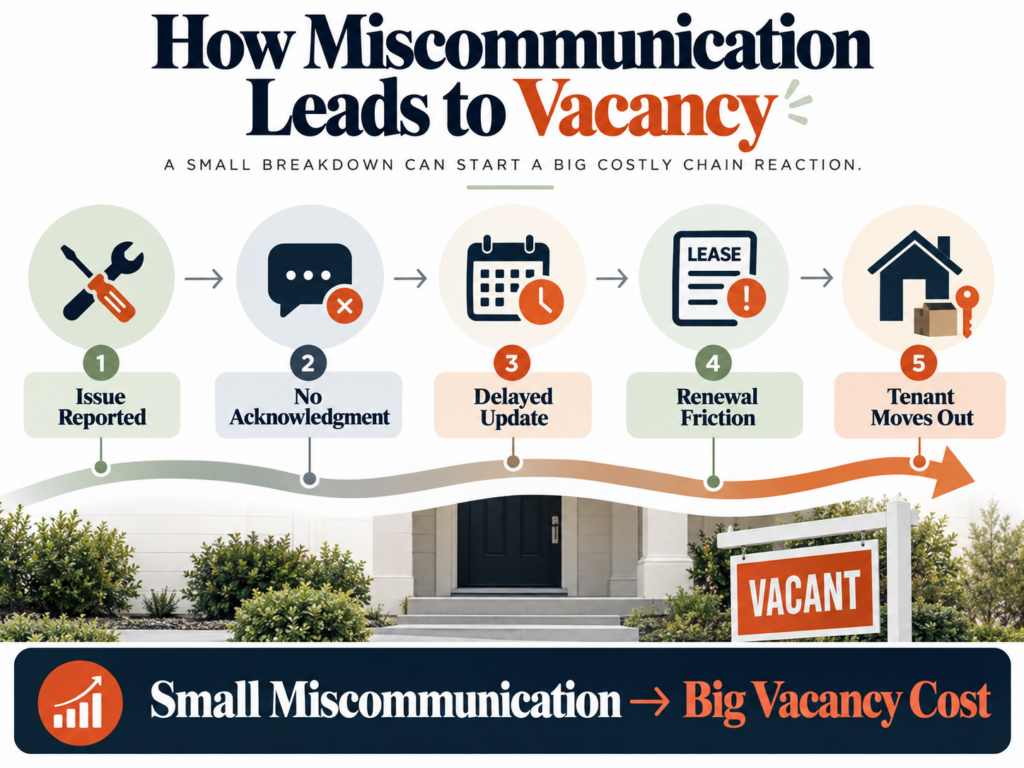
I have seen this pattern more than once. A tenant reports an issue. The landlord intends to handle it, but does not acknowledge the message right away. The vendor takes longer than expected. Nobody tells the tenant what is happening. The repair eventually gets done, but the tenant remembers the silence more than the repair.

A few months later, another message goes unanswered for a day or two. Then a rent increase arrives with very little explanation. Nothing is dramatic enough to cause an argument, so the landlord assumes the relationship is fine. The tenant, meanwhile, is building a quiet list of reasons not to renew.

That is what makes communication related vacancy hard to spot. Good tenants often do not threaten to move. They simply make a different decision when the lease ends. By the time the landlord realizes there was a problem, the tenant may already have toured another house.

The Repair Request That Changes the Math

In DFW and North Texas, cooling problems are a good example because timing matters so much. An air conditioner that struggles through a long stretch of triple digit summer heat is already stressful for the tenant. If the landlord responds quickly, explains when the technician is coming, and gives an update when the schedule changes, the tenant may be frustrated with the equipment but not with the landlord.

If the same request disappears into silence for two days, the tenant reads the situation differently. The issue is no longer just the air conditioner. It becomes a question of whether the home will be managed reliably when something important goes wrong.

The same principle applies to a plumbing leak, a drainage problem, roof damage after hail or high winds, or a fence damaged during a storm. A landlord cannot always make a vendor appear instantly, especially when crews are backed up across Dallas, Fort Worth, Arlington, Plano, Frisco, McKinney, Denton, and other North Texas communities. But the landlord can acknowledge the request and keep the tenant informed. That costs almost nothing and can protect a tenancy that is worth thousands of dollars over the next year.

The Renewal Conversation Matters

Another common mistake is treating renewal like a paperwork deadline instead of a business decision. If the first real conversation about the next lease happens when the renewal notice is sent, the landlord has very little time to learn whether the tenant has concerns.

I would rather start the conversation early. Ask how the house has been working for them. Ask whether there is anything unresolved. If the rent is going up, explain the new amount clearly and give the tenant time to think about it. This does not guarantee a renewal, but it gives the landlord a chance to solve a preventable problem before the tenant starts shopping elsewhere.

A reliable tenant who pays on time and takes care of the property has financial value. Replacing that tenant means vacancy days, cleaning, repairs, advertising, screening, and uncertainty about the next resident. That cost should be part of the renewal decision.

Run the Turnover Math

Take a simple example. Assume a house rents for $2,000 a month. Two weeks of vacancy is about $1,000 in lost rent before any make ready work, leasing costs, utilities, or repairs are added. If turnover requires another $1,500 in cleaning, paint, and minor repairs, the cost is already around $2,500. A longer vacancy or a larger repair list pushes the number higher very quickly.

Now compare that with the cost of a few communication habits: acknowledge maintenance requests, give realistic vendor updates, follow up after repairs, and start renewal conversations early. Those habits do not eliminate every vacancy. Tenants still move for jobs, family, home purchases, and other reasons. But they reduce the number of turnovers caused by something the landlord could have handled better.

For a small portfolio, that is the point. Communication is not about being overly friendly or available every hour of the day. It is a low cost operating habit that helps protect rent already being earned.

The First Message Every New Tenant Should Receive

The first few days of a tenancy tell me a lot about how the next year is going to go. A new tenant is learning the house, learning your expectations, and deciding how they should communicate with you. If you leave all of that vague, you will spend the next few months answering questions that could have been handled on day one.

I see small landlords make the same mistake all the time. They hand over the keys, say, “Call me if you need anything,” and assume the lease will cover the rest. Then the tenant texts a maintenance request to a personal number at 10 PM, pays rent the wrong way, or is not sure what counts as an emergency.

Welcome back to “Ask a Property Manager.” Today we are talking about one of the easiest ways to start a tenancy well: the first message you send after move in.

Start With a Real Welcome

The message should sound like it came from a person, not a lease packet. A short welcome is enough. Tell the tenant you are glad they are in the home, that you want communication to be easy, and that you are going to give them the basic information they will need.

I would not lead with late fees, violations, and warnings. There is a place for those things, and most of it is already in the lease. The first message should make the tenant feel organized, not threatened.

Explain How Rent Is Handled

Next, make rent simple. State the due date, the payment method, and where the tenant should go if they have a payment question. If your lease includes a grace period or late fee, refer them back to those lease terms rather than rewriting the whole section in a text message.

The goal is to remove guessing. If rent is paid through a portal, include the correct link or login instructions. If you use another method, spell it out clearly. A tenant should not have to search through an old email thread on the first of the month to remember where rent goes.

Give Maintenance Its Own Lane

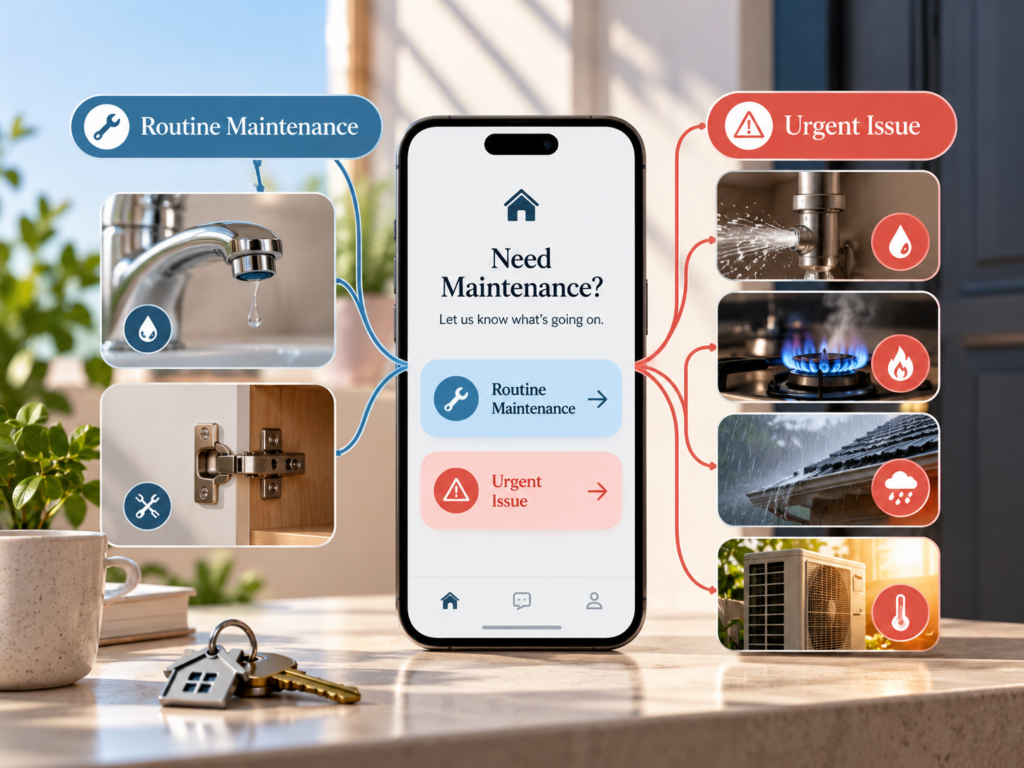
This is the part that saves the most time later. Tell the tenant exactly how routine maintenance should be reported. I prefer a portal, email address, or simple form because it keeps the request in writing and gives you something you can track.

Then explain what you want them to do when something is truly urgent. In DFW and North Texas, that might be an active plumbing leak, a strong gas smell, electrical arcing, water coming through the roof after a severe thunderstorm, or a cooling failure during dangerous summer heat. A slow cabinet hinge or a dripping faucet should follow the regular maintenance process.

You do not need a long emergency policy in the welcome message. You just need enough detail that the tenant knows which number to use and when to use it.

Set Communication Expectations Early

Tell the tenant your normal business hours and how quickly you usually respond. That one sentence prevents a lot of frustration on both sides. If they send a routine question after hours, they know it will be handled during the next business period. If you promise a response within one business day, make sure you can consistently meet that standard.

For landlords with houses spread across Dallas, Fort Worth, Arlington, Plano, Frisco, Denton, or other North Texas communities, I also like to explain that vendors may contact the tenant directly to schedule access. That keeps a plumber or HVAC company from looking like a random caller and makes scheduling easier across a large service area.

Include the House Specific Details

Finish with the small things that are easy to forget. Trash day, HOA parking rules, irrigation or freeze preparation instructions, filter sizes, gate codes, or anything unusual about the property can go here. These are not major lease terms. They are the practical details that help someone settle into a house without calling you five times the first week.

A good welcome message does not need to be long. It needs to answer the questions the tenant is most likely to have and show them how you run the property. Write it once, keep it as a template, and adjust the house specific details for each move in. A clear first message makes the relationship feel organized from the beginning, and that is much easier than trying to create structure after confusion has already started.