This Content Is Only For Subscribers
Most lease disputes do not begin because a landlord deliberately ignored Texas law. They begin with a sentence that seemed clear when everybody signed and became much less clear when money, property damage, a repair, or a move out was involved.
Welcome to Landlord Legal Lowdown. For DFW and North Texas landlords, the lease is one of the most important risk management documents in the rental business. It is the operating agreement for the tenancy. When the language is vague, casual, or incomplete, two people can remember the same conversation in different ways.
The disciplined landlord does not rely on phrases such as “we will work it out,” “just let me know,” or “you know what I mean.” Those phrases feel harmless while the relationship is smooth. They become liabilities when there is a late payment, disputed repair, unapproved pet, parking issue, or security deposit deduction.
Precision is not hostility. It gives both sides the same set of instructions. The goal is not a lease packed with intimidating legal language. It is a lease specific enough to protect the property, understandable enough to be followed, and consistent enough to use without improvising.

The Cost of a Vague Lease
A vague lease does not eliminate a disagreement. It postpones it until the disagreement is more expensive.
Consider the phrase, “Tenant is responsible for utilities.” It sounds complete. But which utilities? Electricity, gas, water, wastewater, trash, internet, lawn irrigation, and other charges may not all be handled the same way. In DFW and North Texas, a rental may involve city water service, an electric retail provider, a private trash service, or an HOA related arrangement. If an account remains in the owner’s name because a transfer was never completed, a general sentence leaves room for competing assumptions.
The same problem appears in phrases such as “reasonable notice,” “promptly report repairs,” or “keep the premises clean.” Each sounds clear in casual conversation but becomes subjective in a dispute.
A strong lease does not predict every possible behavior. It identifies the situations most likely to create financial or legal exposure and assigns clear responsibilities, procedures, time frames, and consequences. If the lease expects a tenant to do something, the tenant should be able to identify the required action.
Rent, Late Fees, and Payment Instructions
The rent clause is the most important financial provision in the agreement, yet many small landlords still rely on “rent is due on the first” as though that finishes the job.
The lease should identify the monthly rent amount, due date, approved payment methods, payment destination, and instructions necessary to make payment correctly. If online payment is required, identify the platform. If checks or money orders are accepted, explain how and where they must be delivered. If partial payments require a separate written agreement, say so plainly.
Late fee language deserves special attention. Texas law permits late fees only under certain conditions, including notice in the written lease and compliance with the applicable statutory standard. A landlord should not wait until rent is late and then decide what charge seems appropriate. The clause should state when the fee may apply and how it is calculated.
Clarity protects the tenant from surprise and gives the landlord a cleaner ledger. A written payment arrangement is also far better than a text saying, “Pay me when you can.” If the parties agree to something different for a particular month, document the agreement and how it affects the balance.
Maintenance Language Must Describe the Process
Maintenance is where landlords often confuse a general obligation with a workable procedure. A lease may say the landlord will make required repairs, but it does not tell a tenant how to report an active water leak at nine o’clock on a Sunday night or what information a vendor needs.
The lease and move in materials should explain the reporting channel, emergency contact method, and information the tenant should provide. The goal is to make sure a tenant can give effective notice quickly and the landlord can later show what was reported and when.
The distinction between an emergency and a routine request should be concrete. Active water intrusion, a gas odor, an electrical burning smell, and a complete loss of air conditioning during dangerous North Texas heat are not the same as a loose cabinet handle.
The lease should also explain what the tenant may not do. A tenant should not assume they can hire a contractor, alter a system, or deduct an invoice from rent without following the lease and applicable law. Texas repair rules are fact specific, so custom language affecting repair rights should be reviewed carefully.
Occupants, Guests, and Pets Require Definitions
The phrase “no unauthorized occupants” is common because it matters. It is also incomplete when the lease does not explain the line between a guest and a resident.
A tenant may believe a partner staying several nights a week is still a guest. The landlord may believe that person has effectively moved in. The lease should reduce the guesswork by identifying the guest policy, the approval process for an additional occupant, and any screening or documentation required before another resident is approved.
Pet provisions need the same discipline. “No pets without approval” is a beginning, not a complete policy. The lease or pet addendum should state whether pets are prohibited, permitted with written approval, or subject to specific charges or conditions. Do not rely on an informal promise made during a showing.
Assistance animal requests should be handled through the appropriate legal process rather than treated like an ordinary pet issue simply because an animal is involved.
Utilities, Lawn Care, and Everyday Responsibilities
Small landlords often spend time resolving arguments over practical details nobody covered. Who changes the air filter? Who waters the lawn? Who pays a utility charge that appears halfway through the lease? Who reports a broken sprinkler head? Who handles pest control?
The lease should assign each responsibility directly. If the tenant must keep electricity active, say that. If the owner pays one utility and the tenant pays another, identify each service. If the tenant is responsible for lawn care, explain what that includes instead of using “maintain the yard.”
This matters across DFW and North Texas because lawn needs, irrigation systems, watering restrictions, and HOA standards can vary from one neighborhood to the next. A tenant cannot follow an expectation they were never given.
HOA rules deserve attention too. Many subdivisions regulate parking, trash containers, exterior appearance, pools, and other everyday issues. If the tenant is expected to comply with those rules, the lease should say so and the landlord should provide access to the current rules before the first violation letter arrives.
Access, Entry, and Changes to the Property
A lease should explain how access to the home will work. Tenants should be able to feel secure in the property. Landlords still need access for repairs, inspections, preventive maintenance, appraisals, and sometimes showings.
Identify the communication method for nonemergency access and the notice practice you intend to follow. Emergency circumstances may require a different response, but ordinary access should not feel improvised.
The same section should address alterations. A tenant may want to paint a bedroom, mount a television, install shelving, replace a light fixture, or add a lock. Problems start when the tenant assumes silence means permission or remembers a conversation differently than the landlord does.
State the approval process in writing. Identify which changes require written permission, who pays for restoration, and whether an approved improvement remains with the property at move out.

Addenda and Rule Changes Are Part of the Lease
A lease is not something a landlord signs and then casually edits through text messages. A changed parking rule, new payment process, added pet, or revised maintenance responsibility can alter the expectations of the tenancy. If a change matters enough to enforce, it matters enough to document.
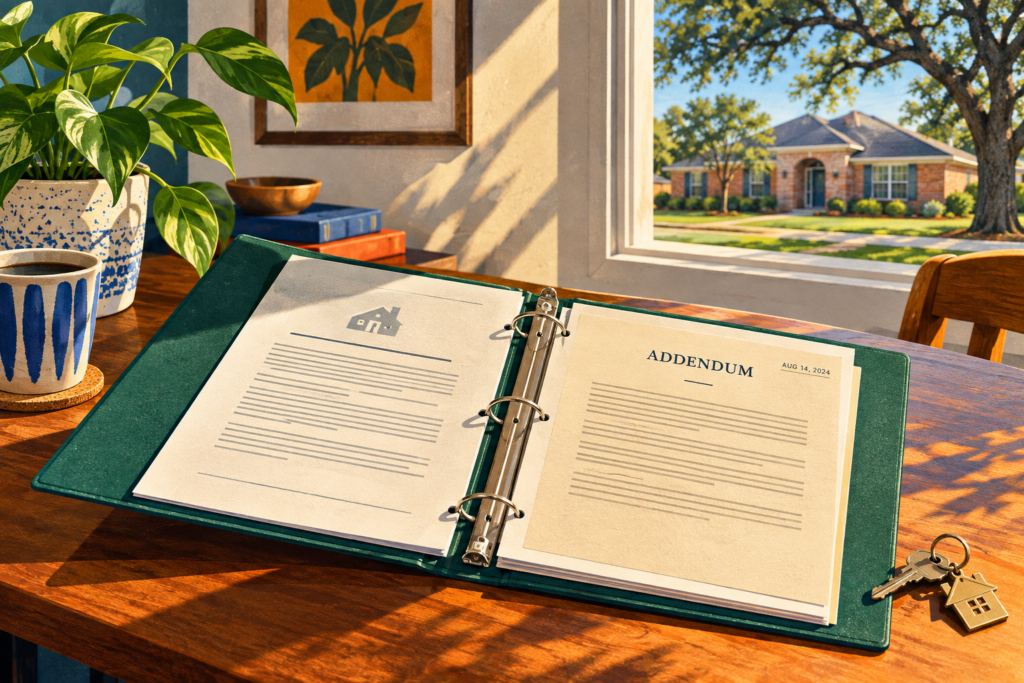
Use a written addendum or amendment that identifies the property, parties, effective date, and exact term being changed. Obtain signatures where appropriate. Keep the completed document with the original lease and provide the tenant a copy.
Texas law requires a landlord to provide at least one complete copy of the lease to at least one tenant no later than the third business day after the lease has been signed by each party. Treat important addenda with the same care. A document you cannot locate, date, or show was delivered may not help much when the relationship is under stress.
Consistency Matters as Much as Wording
Clear lease language is not about sounding more sophisticated. It is about creating a written operating system that leaves fewer important questions to memory or personal interpretation.
Before adding a custom clause, ask three questions. Does the language identify the action required? Does it explain how the tenant complies? Can I apply it consistently to another tenant in the same situation?
If not, the language needs more work.
Use a reliable Texas lease form as the foundation. Keep legally reviewed provisions intact unless qualified Texas counsel advises otherwise. Then make custom policies direct enough that an ordinary tenant can understand them without a separate translation.
Read the Lease Before the Dispute
The best time to find an unclear clause is not after a tenant has stopped paying, hired a contractor, moved in another occupant, or disputed a move out charge.
Once or twice a year, read the lease the way a tenant would. Look for deadlines with no delivery method, fees with no calculation, approval rules with no contact process, and responsibilities that depend on phrases such as “as needed” or “keep in good condition.”
Then look at the problems your properties actually had during the last year. If the same question keeps coming up, the lease or move in materials may need to answer it more clearly.
A lease cannot prevent every disagreement. People still misunderstand each other, circumstances change, and some disputes require legal advice no matter how carefully the paperwork was written.
But ambiguity is expensive. It creates room for late payment arguments, delayed repair notices, unauthorized occupants, property damage, HOA problems, and move out disputes that could have been easier to resolve.
For a DFW or North Texas landlord, the goal is not a lease that sounds impressive. It is a lease that works when something goes wrong. The language should tell both sides what the rule is, what action comes next, and where the written record begins.