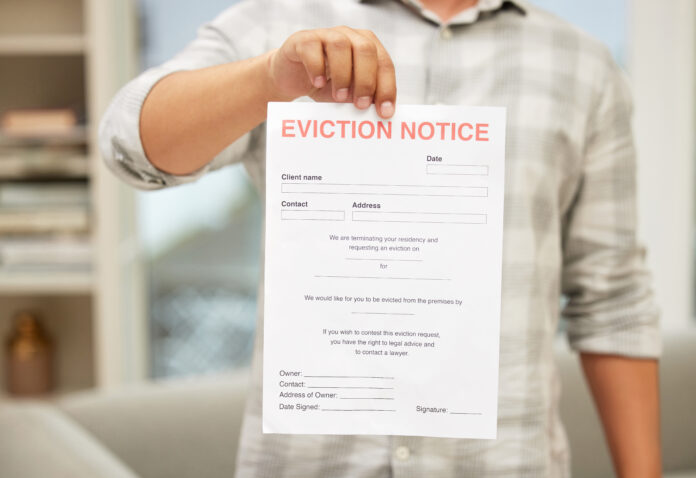
Few parts of owning rental property are more uncomfortable than asking a tenant to leave. Even when the reason is clear, such as unpaid rent, repeated lease violations or serious property damage, most landlords would rather solve the problem without going to court.
Unfortunately, some situations reach a point where ordinary reminders and conversations are no longer enough. When that happens, the notice to vacate becomes one of the most important documents in the eviction process.
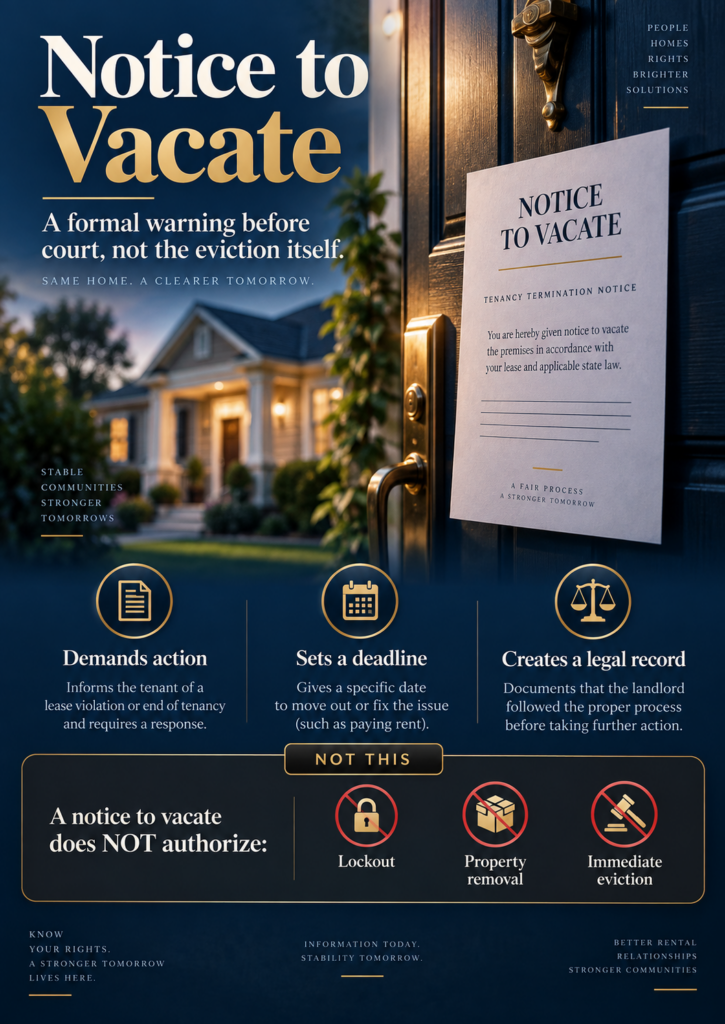
A notice to vacate is not the eviction itself. It does not give the landlord the immediate right to change the locks, remove the tenant’s belongings or physically take back the property. Instead, the notice generally tells the tenant that the landlord is terminating or enforcing the tenancy and that the tenant must either correct the problem, when permitted, or move out within a legally required period.
If the tenant does not comply, the notice may provide the foundation the landlord needs to file an eviction case.
That is why the notice should never be treated as a casual form letter. A mistake involving the wording, timing, delivery method or amount demanded can delay the case, increase legal expenses and sometimes require the landlord to begin the process again.
What a Notice to Vacate Actually Does
The terminology changes from one jurisdiction to another. Depending on the state and the reason for the proposed eviction, the document may be called a notice to vacate, notice to quit, demand for possession, pay or quit notice, cure or quit notice or notice of lease termination.
Although the names differ, the general purpose is similar. The notice formally communicates that the landlord is demanding action from the tenant and establishes a deadline before the landlord proceeds to court.
In many jurisdictions, a landlord must provide some form of written notice before filing an eviction lawsuit. The exact requirement may depend on the lease, state law, local ordinances, the type of tenancy and the reason possession is being requested. Some notices give the tenant an opportunity to correct the issue. Others simply require the tenant to leave by a certain date.
The notice also creates a record. If the case later reaches court, the landlord may need to prove what was delivered, when it was delivered, how it was delivered and why the tenant was asked to leave.
In other words, the notice is where the landlord begins turning a rental dispute into a documented legal process.
When Is a Notice Commonly Sent?
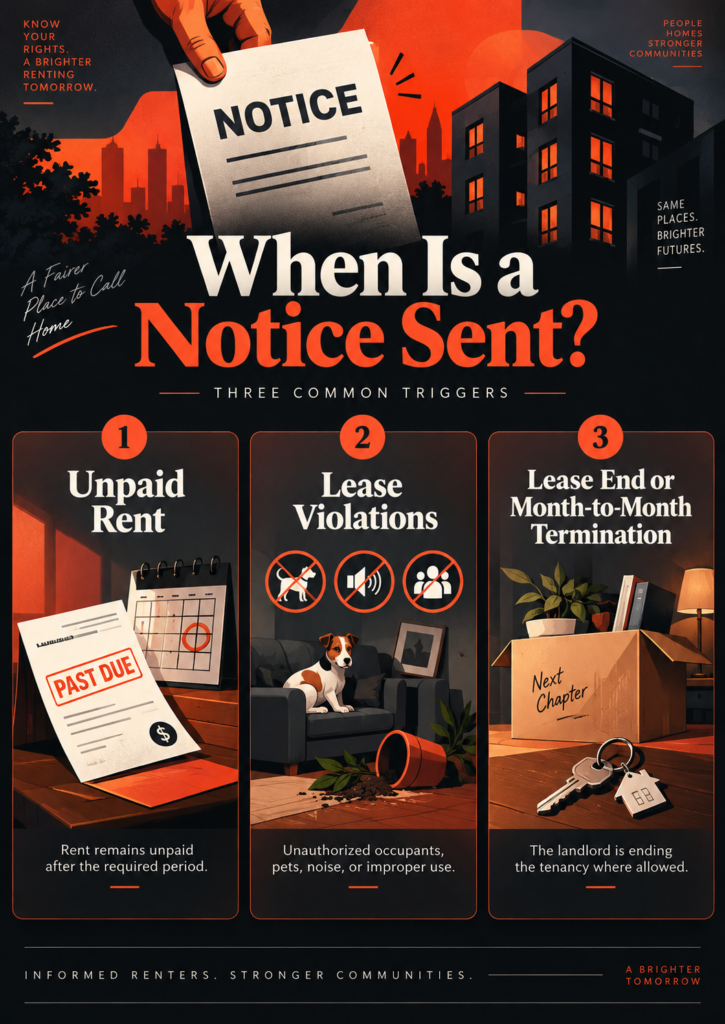
The most common reason for sending a notice is unpaid rent.
A tenant misses the due date, any applicable grace period passes and the balance remains unpaid. Depending on local law and the lease, the landlord may then send a notice requiring the tenant to pay the amount due or leave the property.
Some states provide tenants with a right to cure nonpayment by paying within the notice period. In other places, the rules may depend on whether the landlord accepts partial payment, whether a prior notice was sent or whether the property participates in a subsidized housing program.
A notice may also be sent because of a lease violation. Common examples include unauthorized occupants, unapproved pets, repeated noise complaints, prohibited activity, improper property use or failure to maintain the home as required by the lease.
When the violation can reasonably be corrected, the tenant may receive a cure or quit notice. This type of notice generally gives the tenant a limited period to stop or correct the violation. If the problem is corrected properly and on time, the tenancy may continue. If the tenant does nothing or repeats the conduct, the landlord may be able to move forward with eviction.
Not every violation comes with a right to cure. Serious criminal activity, violence, substantial property damage or conduct threatening the safety of others may be treated differently under state law. Landlords should be especially careful in these situations because emergency circumstances, police involvement and local legal standards can affect the correct procedure.
A notice may also be required when a lease expires or a month-to-month tenancy is being terminated. This is sometimes referred to as a no-fault termination because the landlord is not necessarily accusing the tenant of wrongdoing. The landlord may want to sell the property, move into it, complete major renovations or simply end the rental relationship where the law permits.
However, no-fault terminations are among the areas where state and local rules vary significantly. Some jurisdictions require a specific reason, relocation assistance or a longer notice period. Others give landlords broader authority to end periodic tenancies. A lease expiration also may not automatically authorize removal if local protections apply.
Why the Notice Comes Before Court
The notice period serves several practical and legal purposes.
First, it gives the tenant a final opportunity to resolve the matter without litigation. A tenant who receives a formal notice may pay the balance, remove an unauthorized occupant, correct a lease violation or voluntarily move out.
That outcome may be better for everyone. The landlord regains compliance or possession without paying filing fees, attending court or waiting for law enforcement to enforce a judgment. The tenant may avoid an eviction filing that could make future housing more difficult to obtain.
Second, the notice clearly identifies the problem. Informal conversations can easily become disputed. A landlord may remember discussing unpaid rent on Monday, while the tenant remembers being told that payment could wait until Friday. A properly written notice removes some of that uncertainty by identifying the reason for the demand and the applicable deadline.
Third, the notice supports procedural fairness. An eviction lawsuit affects a person’s right to remain in their home. The notice gives the tenant warning that the landlord intends to pursue possession and provides time to respond, cure the issue when allowed or seek legal assistance.
Finally, the notice satisfies a condition that courts often expect the landlord to complete before filing. A landlord may have a strong underlying complaint and still lose or delay the case by using the wrong notice.
Attorney and housing advocate Mark Melton has pointed out that an eviction defense may exist when “the landlord didn’t follow the required steps leading up to an eviction filing.”
For landlords, that statement should be taken seriously. The court will not always overlook a procedural error simply because rent was unpaid or the lease was violated. The landlord generally carries the responsibility of showing that the correct process was followed.
The Notice Is Not Permission to Remove the Tenant
One of the most important distinctions for a landlord to understand is the difference between terminating a tenancy and physically recovering possession.
A notice may terminate the tenant’s right to remain after the stated deadline, depending on applicable law. It does not normally authorize the landlord to personally remove the tenant.
If the tenant remains after the notice period expires, the next step is generally to file the appropriate eviction or possession action in court. The case may be called an eviction, unlawful detainer, forcible detainer, summary process or another local term.
The tenant is then served with court documents and receives an opportunity to respond or appear. If the landlord proves the case and receives a judgment for possession, the court may issue a writ, warrant or similar order. An authorized law enforcement officer then carries out the physical removal if the tenant still refuses to leave.
Landlords should not attempt to skip these steps by changing the locks, removing doors, shutting off utilities, taking the tenant’s belongings or using threats to force the tenant out. These actions are commonly referred to as self-help eviction and are prohibited or heavily restricted in residential tenancies across much of the country. A landlord who uses self-help may face damages, penalties, attorney fees or an order restoring the tenant to possession.
Even a tenant who clearly owes rent is generally entitled to the legal process required in that jurisdiction.
What Should the Notice Include?
There is no universal notice form that works in every state. Still, a legally sufficient notice commonly addresses several basic points.
It should correctly identify the tenant or tenants, the rental property and the landlord or party demanding possession. It should clearly state why the notice is being given. If money is owed, the amount should be calculated carefully and should not include charges that cannot legally be demanded in that type of notice.
The notice should state exactly what the tenant must do. That may mean paying a specific amount, correcting a violation, stopping prohibited conduct or vacating the property.
It should also provide a clear deadline based on the legally required notice period. Calculating that deadline may involve rules concerning weekends, holidays, the day of service and the method used to deliver the document.
The wording should be direct, professional and free from personal attacks. A notice is not the place to vent frustration or argue about the tenant’s character. Stick to the lease, the facts and the required demand.
Whenever a state or court-approved form is available, landlords should strongly consider using it rather than creating a notice from scratch. The correct form may change depending on the reason for termination, so confirming that the form matches the situation is essential.
Delivery Matters as Much as the Words
A perfectly written notice may still fail if it is delivered incorrectly.
State laws may permit personal delivery to the tenant, delivery to another qualified occupant, posting at the property, mailing or a combination of methods. Certain jurisdictions require certified mail or proof of mailing. Others allow posting only after personal delivery has been attempted.
Email and text messages may be useful for ordinary communication, but landlords should not assume they satisfy formal service requirements. Even if the tenant replies and acknowledges receiving the message, the law may require another delivery method.
Landlords should document service carefully. Keep a copy of the completed notice, photographs if posting is permitted, mailing receipts, delivery confirmations and a written record identifying who served it and when.
The landlord may later need to testify about those details. Depending on local court procedures, the person who delivered the notice may also need to complete an affidavit or proof of service.

Common Mistakes That Cause Problems
One of the most frequent mistakes is using the wrong notice period. A landlord may rely on a generic online form without realizing that the state, county or city requires more time.
Another mistake is naming only one tenant when several adults signed the lease. The notice may also identify the property incorrectly, omit an apartment number or demand charges that do not belong in the notice.
Some landlords file the eviction before the full notice period has expired. Others accept rent after sending the notice without understanding whether that payment cancels, waives or alters the notice.
Landlords may also use the wrong type of notice. A notice for unpaid rent is not necessarily appropriate for an unauthorized pet, and a notice to cure may not be the correct document for ending a month-to-month tenancy.
Retaliation and discrimination are additional concerns. A landlord should not use the eviction process to punish a tenant for reporting unsafe conditions, exercising a legal right or making a protected complaint. Federal fair housing law also prohibits housing discrimination based on protected characteristics, and state or local laws may protect additional groups.
A Notice Can Still Open the Door to Resolution
Sending a notice does not always mean the landlord has decided that eviction is unavoidable.
Sometimes it brings urgency and clarity to a situation that has drifted for too long. A tenant may arrange payment, provide a move-out date or agree in writing to correct the problem. The parties may create a repayment agreement or negotiated surrender of the property.
Landlords should document any agreement that changes the notice or pauses the eviction process. A casual verbal promise can create confusion about whether the landlord agreed to extend the deadline or accept a different payment arrangement.
Any agreement should explain what each party must do, when it must happen and what occurs if the agreement is not honored. Where permitted, the landlord may also want the agreement reviewed by an eviction professional before relying on it.
Treat the Notice as the Beginning of the Case
The safest approach is to assume that every notice may eventually be examined by a judge.
That mindset encourages the landlord to verify the lease, confirm the balance, review local requirements, use the correct form and preserve proof of delivery. It also encourages calm, professional communication.
The notice to vacate is not merely a warning letter. In many cases, it is the procedural bridge between a lease problem and the landlord’s right to ask a court for possession.
When it is prepared correctly, the notice gives the tenant a fair opportunity to respond and gives the landlord a clearer path forward. When it is prepared carelessly, it can turn an otherwise valid eviction into a longer and more expensive dispute.
For private landlords and real estate professionals, the lesson is simple. Do not rush the notice because you are eager to reach the courthouse. The notice is part of the courthouse process, even though it is usually delivered before the case is filed.
Disclaimer: This article is intended for general educational purposes only and is not legal advice. Eviction procedures, notice periods, required language and service methods vary by state and may also be affected by county or city ordinances, the lease, subsidized housing rules and the facts of the case. Before issuing a notice or filing an eviction, consider speaking with a licensed eviction attorney, experienced property manager or other qualified eviction professional in the jurisdiction where the property is located.