
Most small landlords learn the reserve lesson the expensive way. The property is leased, rent is coming in, and the monthly numbers look healthy. Then the air conditioner gives up in August. In DFW and North Texas, a long stretch of triple digit heat can turn that into a large repair bill at the exact time HVAC companies are busiest. If there is no reserve account, a business expense suddenly becomes a personal cash problem.
A reserve account does not make a rental more profitable. It keeps one repair from exposing how thin the profit really was. For a small landlord, that difference matters.
What the Reserve Account Is For
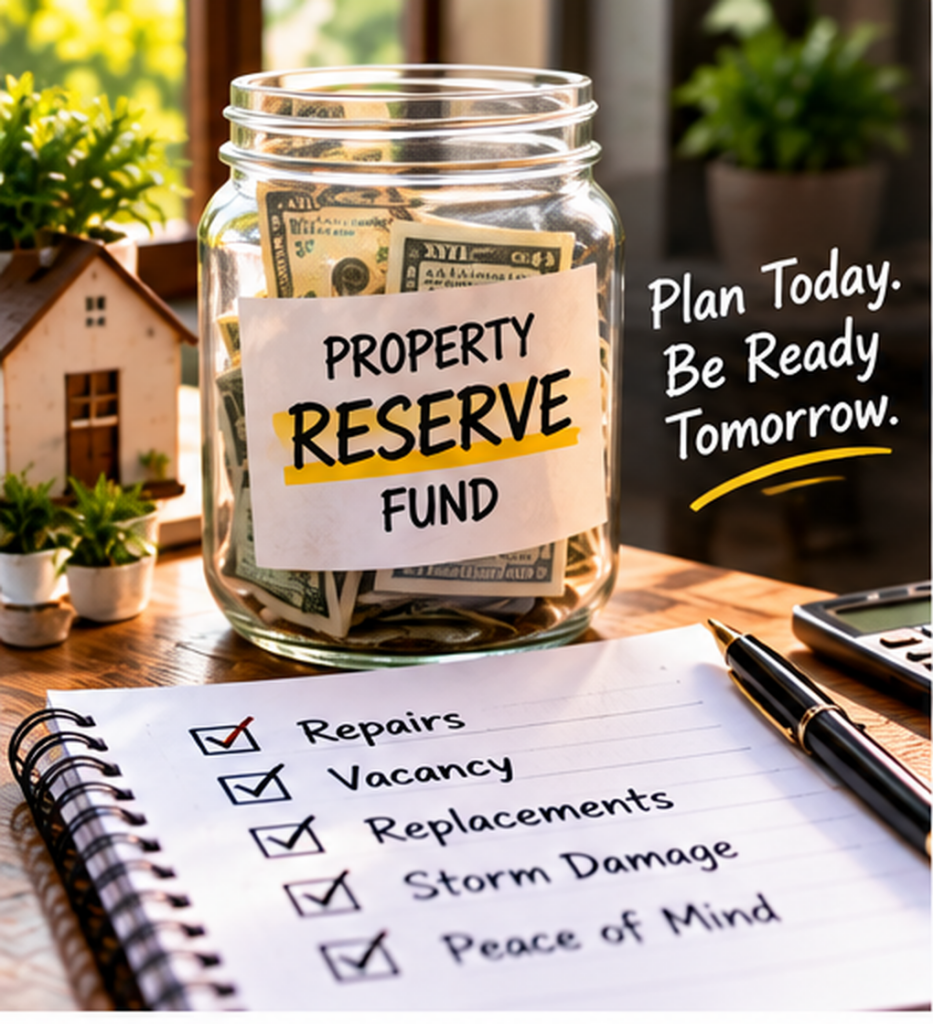
A reserve account is simply money set aside for the property before the property asks for it. It should be separate from the account you use for personal spending and separate from the checking account that collects rent and pays ordinary bills.
I like the separation because it removes temptation. If the money is sitting in the same account as everything else, it is easy to treat a strong month as extra income. A dedicated reserve makes the decision for you. That money already has a job.
How Much Should Be Sitting There
There is no single number that fits every rental. A newer house with a recently replaced roof, HVAC system, and water heater does not carry the same near term risk as a twenty year old house with original equipment.
A reasonable starting point is to hold enough liquid cash to cover at least one meaningful repair without borrowing. For many small landlords, one or two months of gross rent per property is a useful floor. From there, I would add a monthly contribution based on the age and condition of the expensive systems.
For example, suppose an HVAC system will probably need replacement within five years and you expect that job to cost about $9,000. Setting aside $150 per month gives you a real plan instead of a future surprise. Do the same exercise for the roof, water heater, flooring, and major appliances.
In DFW and North Texas, I would pay particular attention to cooling equipment, roof condition, drainage around the foundation, and any history of hail or storm damage. Long hot summers are hard on HVAC systems, North Texas hail can shorten the life of a roof or condenser, and expansive clay soil makes consistent drainage and irrigation worth watching.
Operating Reserve and Capital Reserve
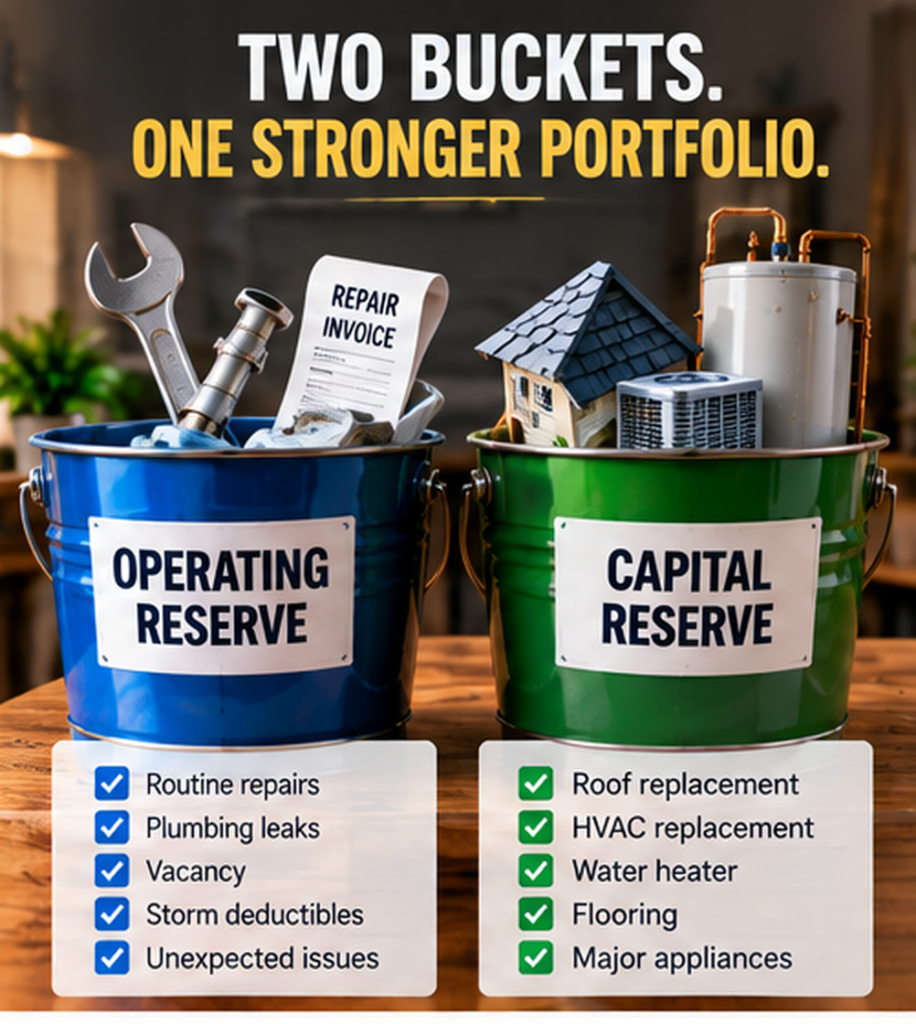
I think about reserve money in two buckets even if it sits in one account. The first bucket is for ordinary surprises. A plumbing leak, a broken garage door, a vacant month, a hail deductible, or an emergency repair after a hard freeze belongs here.
The second bucket is for replacements you can see coming. A fourteen year old water heater is not really an emergency. Neither is an aging roof. You may not know the exact month the expense will arrive, but you know the expense is coming.
That distinction changes how you read cash flow. If the property produces $500 a month before reserves but really needs $250 a month set aside for future work, I would call it a $250 cash flow property. The other $250 belongs to the house.
Why Credit Cards Are a Bad Reserve Plan
A credit card can solve a timing problem, but it is a poor substitute for reserves. Financing an HVAC replacement or a major plumbing repair adds interest to an expense that was already expensive. It also leaves the landlord rebuilding personal cash at the same time the property may have another issue.
Reserves protect more than the current property. They protect your ability to make the next investment decision from a position of strength. A landlord who has just drained personal savings to repair one house is less likely to move on a good opportunity when it appears.
If You Are Starting From Zero
Do not wait until you can fund the perfect reserve. Open the account and start. Put in one month of rent if you can. If you cannot, choose a fixed amount from every rent payment and increase it as the property becomes stronger.
The key is consistency. A landlord who moves $200 into reserves every month is building a real business habit. A landlord who plans to save whatever is left over at the end of the month usually finds that very little is left.
The Number I Would Protect
If I owned a small rental portfolio in DFW and North Texas, the reserve balance would be one of the first numbers I checked. Not because I expect something to go wrong every month, but because North Texas heat, hail, freezes, and normal property wear eventually put every house to the test. A good reserve lets the repair stay a property expense instead of becoming a personal emergency.