This Content Is Only For Subscribers
There is a point where a rental stops being a house that sends you a rent check and starts being a business you can actually measure. The difference is not portfolio size. It is whether you know where the money goes.
That is what a cash flow map does. It follows the rent from the day it arrives through every expense the property has to carry, then shows you what is truly left. For a small landlord, this may be the most useful financial exercise you can do because it separates a good looking rent number from a good investment.
Welcome back to Investor Corner. This is the part of the magazine where we care less about what the property looks like in a listing photo and more about what it does on a spreadsheet. The goal is simple: know what the asset earns, know what it costs, and make better decisions with both numbers.
Gross Rent Is Only the Starting Number
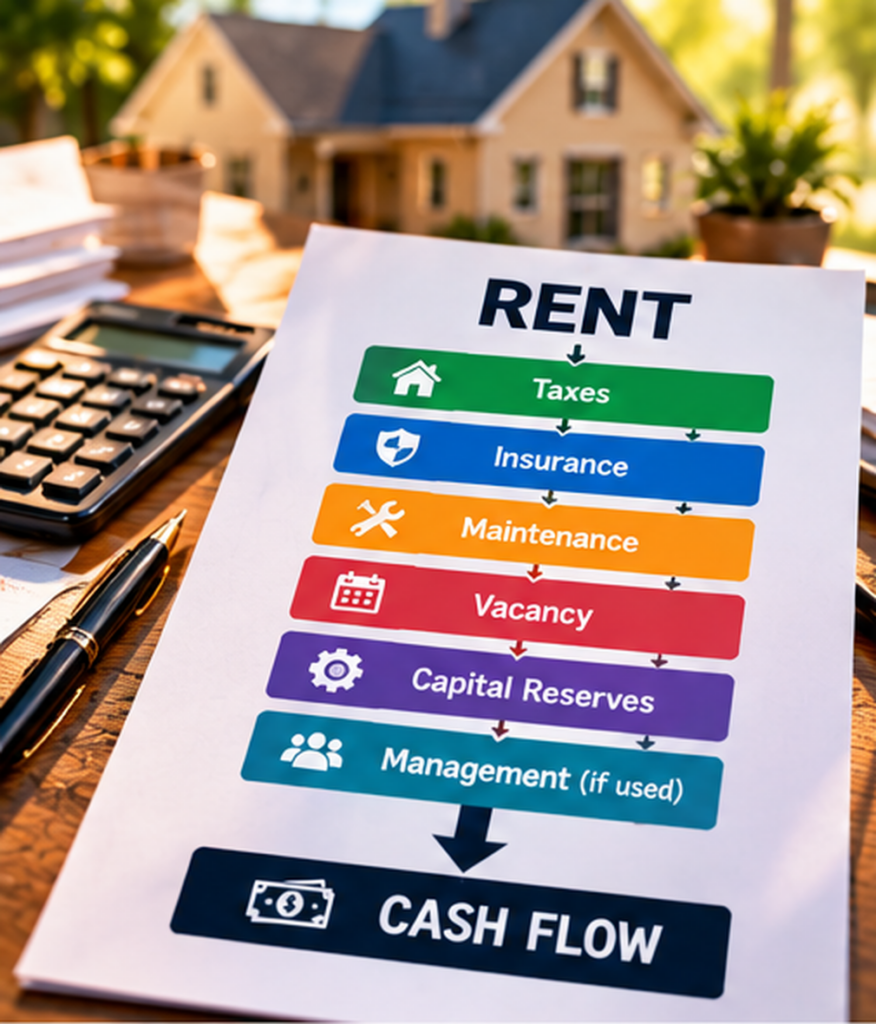
Suppose a DFW and North Texas rental brings in $2,200 a month. If the mortgage payment is $1,450, it is tempting to call the difference a $750 monthly profit.
That is not profit. It is the space between two numbers.
The property still has taxes, insurance, vacancy, maintenance, future replacements, and possibly management costs. None of those disappear because they did not happen to hit the bank account this week.
I would rather start with a smaller, more realistic profit figure than spend the year congratulating myself on cash flow that belongs to the roof, the HVAC system, or the next vacancy.
Map the Fixed Costs First
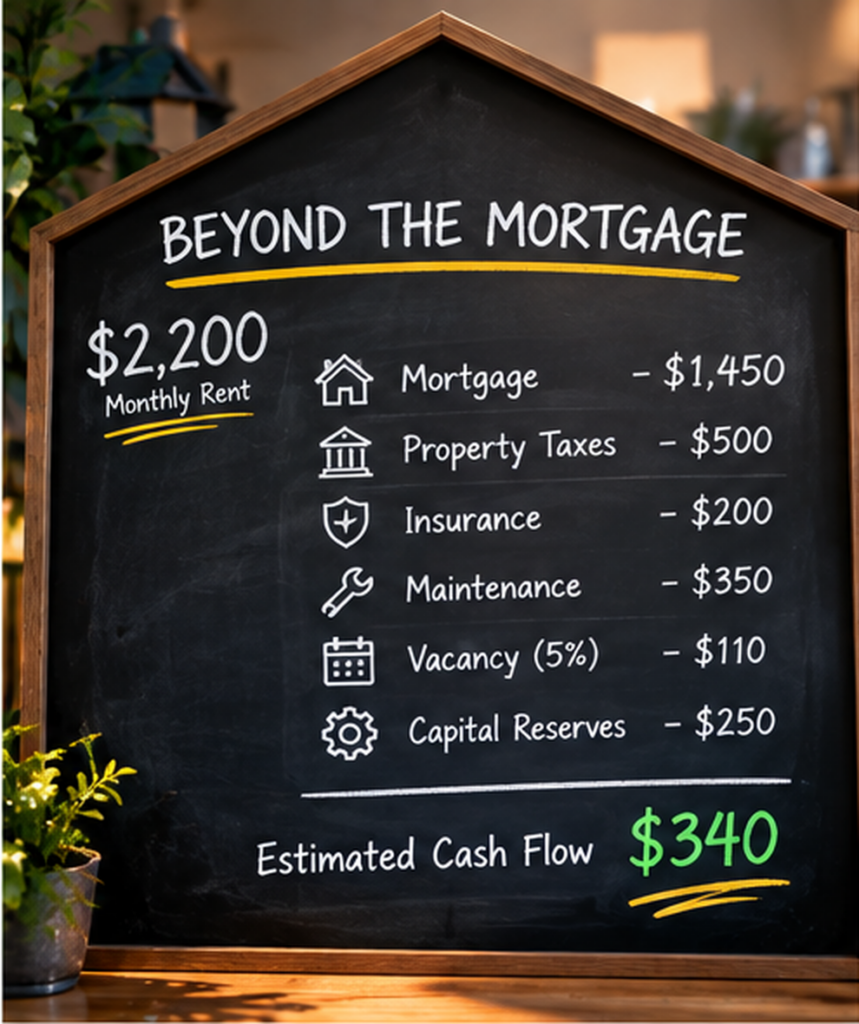
Start with the expenses you can predict. Property taxes, landlord insurance, HOA dues, and any owner paid recurring services belong here. Convert annual bills into monthly numbers so every month carries its share.
If taxes are $6,000 a year, the property carries a $500 monthly tax cost. If insurance is $2,400 a year, that is another $200 a month. It does not matter whether you pay those bills annually or through escrow. The property still has to earn enough to cover them.
For DFW and North Texas investors, I would revisit these figures every year. A deal that worked comfortably when you bought it can tighten when taxes, insurance, HOA costs, or recurring property expenses move up.
I would also separate costs you can influence from costs you mostly have to absorb. You can shop insurance, appeal a tax assessment, or challenge unnecessary recurring services. You cannot simply decide that the tax bill does not count because it is inconvenient. The map helps you see which line items deserve negotiation and which ones simply need room in the rent.
Then Track the Ordinary Operating Costs
The next category is the small stuff that never feels important until you total twelve months of it. Service calls, lawn work, pest control, minor plumbing, garage door repairs, appliance fixes, cleaning, lock changes, and other recurring property expenses belong here.
Do not guess. Use the property history. If you spent $4,200 on ordinary operating items during the last year, that property has been running about $350 a month before the mortgage, future replacements, or vacancy are considered.
The history also tells you where a property may be getting expensive. Three plumbing calls in a year are not just three invoices. They may be a sign that an older system needs a larger fix. Repeated HVAC service, irrigation problems, foundation movement, or recurring roof repairs after hail may be telling you the same thing.
Look for trends instead of obsessing over a single bad month. One plumbing call proves very little. Four calls tied to the same area of the house may be telling you to stop repairing symptoms. Investor Corner is about that distinction. Spend money when spending it once is cheaper than spending smaller amounts over and over.
Give Vacancy Its Own Line
Vacancy is easy to ignore because it does not send an invoice. It simply removes revenue.
A property can be well managed and still have a vacant period between tenants. Make ready work takes time. Leasing takes time. A tenant may give notice at a less convenient time of year. I would rather underwrite some vacancy than build a plan that requires twelve perfect rent checks every year.
For illustration, a 5 percent vacancy allowance on $26,400 of annual rent is $1,320, or about $110 per month. You are not spending that amount every month. You are recognizing that vacancy is part of the business.
Your actual allowance should come from the property and the submarket. A house that leases quickly every time may justify a lower assumption. A property with longer turns, a narrow tenant pool, or a location where leasing is slower may need more. I would rather be slightly conservative than build a return target that depends on perfect occupancy.
Reserve for the Big Items Before They Break
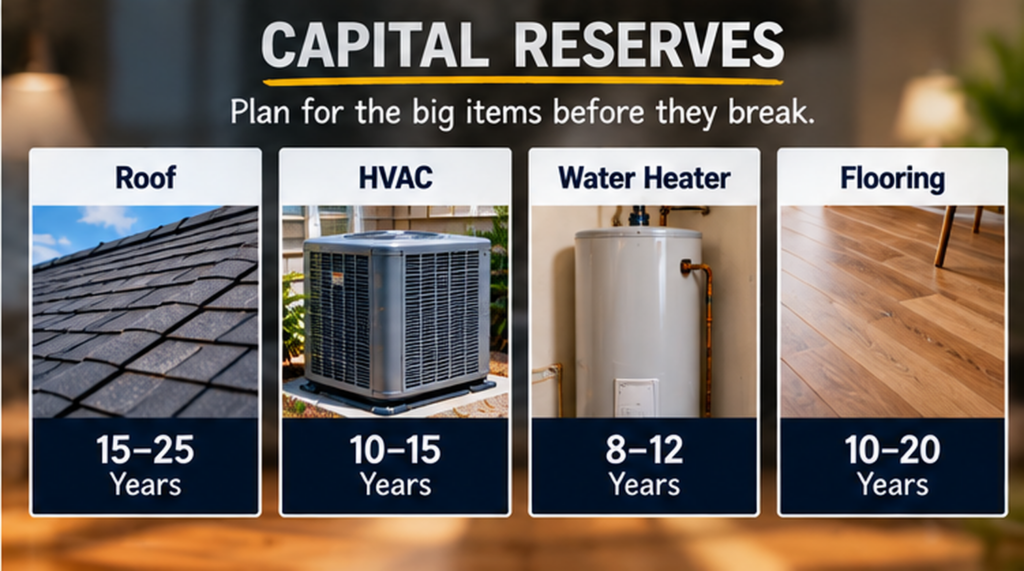
Capital expenses are where casual cash flow calculations usually fall apart. Roofs, HVAC systems, water heaters, flooring, appliances, and major plumbing work do not arrive monthly, so they are easy to leave out.
I would estimate the remaining life and replacement cost of the major systems, then turn those future expenses into a monthly reserve contribution. The number does not have to be perfect. It needs to be reasonable enough that the property is paying toward its own future.
In DFW and North Texas, cooling equipment deserves special attention because of long summer heat. Roofs, hail history, drainage, irrigation, and foundation movement deserve attention too. Storm related deductibles, freeze repairs, and vendor shortages can also turn what looked like a normal reserve assumption into a thin one.
Do the same exercise after a major repair. If you replace the HVAC system, the reserve need for that system drops because you reset its useful life. The map should change as the property changes. Otherwise, you are not measuring the asset you own today. You are measuring the asset you owned several years ago.
Management Has a Cost Either Way
If you hire a property manager, the fee belongs on the map. If you manage the property yourself, I would still track the time.
A management fee is easy to see because it appears on a statement. Owner time is easier to ignore. But if the property requires ten hours of your attention every month, that is part of the investment whether you write yourself a check or not.
This becomes more important as a portfolio grows. A task that is easy for one rental can turn into a real operating burden across five.
The question is not whether management is expensive. The question is whether the cost buys enough time, consistency, leasing performance, and risk reduction to justify itself. Some owners are better off keeping the work. Others are better off buying back their time. Put both choices on the map and compare them honestly.
Debt Service Comes After the Property Operations
Once you know what the property earns before financing, you can look at the mortgage. This is an important distinction because a property can be operationally strong and still produce weak cash flow if the debt is expensive.
For spendable monthly cash flow, subtract the full mortgage payment because the full payment leaves your account. For investment analysis, also remember that part of the payment reduces principal and builds equity. Cash flow and wealth creation are related, but they are not the same thing.
This is also why two properties with the same rent can perform very differently. A lower debt balance can make an average rental a strong cash flow asset. Heavy leverage can make an otherwise solid property feel tight every month. The operations and the financing should be evaluated separately before you judge the deal as a whole.
Now You Can See the Real Monthly Cash Flow
Take a simple example. A house rents for $2,200 a month. After allowing $110 for vacancy, effective monthly revenue is $2,090. Fixed costs are $650. Ordinary maintenance averages $250. Capital reserves are $225. The mortgage is $1,050.
That leaves negative $85 in monthly cash flow. The property may still be paying down debt and may still fit a long term investment plan, but it is not putting spendable cash in your pocket under those assumptions.
Change one number and the picture can change quickly. Raise rent by $100 at the next appropriate renewal, lower recurring maintenance through a planned replacement, or refinance only when the numbers truly improve. The cash flow map shows where an adjustment will actually matter.
I also like to look at the twelve month total instead of judging a property by one month. A month with no repairs can make the return look wonderful. A month with a turnover can make it look terrible. Twelve months smooths out enough noise to show whether the operating plan is working.
Use the Map to Make Decisions
Once the numbers are laid out, you can stop treating every expense as a surprise and start comparing choices.
Would a $4,000 improvement support enough rent to justify the cost? Is a property with repeated repairs still worth holding? Is the rent below the market for that specific North Texas submarket? Is self management saving money once your time is counted? Those questions become much easier when the real cash flow is visible.
This is also where I would compare properties inside a portfolio. One house may produce less rent but require almost no attention. Another may collect more but consume cash through maintenance and vacancy. Gross rent alone will not show that difference.
That comparison is useful when capital is limited. If you have $10,000 to deploy, the map can help you decide whether it belongs in a repair, a rent supporting improvement, a reserve account, debt reduction, or simply staying liquid for the next opportunity. Good investing is often less about finding a clever move and more about putting the next dollar in the right place.
Do Not Forget the Tax Side
Taxes affect what you ultimately keep, but I would keep tax planning separate from the operating cash flow calculation. Residential rental buildings are generally depreciated for federal tax purposes over 27.5 years, excluding land, and depreciation can reduce taxable rental income even though it is not a monthly cash expense.
Sales and exchanges add another layer. A properly structured 1031 exchange may allow an investor to defer certain gains when moving from one qualifying investment property to another, but the rules and timing are strict. This is where I would use a CPA and, when appropriate, a qualified intermediary rather than build the strategy from a spreadsheet alone.
Tax strategy should support the investment, not rescue weak operating math. A property with poor cash flow does not become a great asset merely because it offers depreciation. Start with the real economics of the property, then use qualified tax advice to understand how those economics flow through to your return after taxes.
Read the Property Like a Business
A cash flow map does not make a mediocre deal better. It makes the deal easier to see.
That is the value. You know what the rent is doing, what the property is consuming, what belongs in reserves, what the debt costs, and what is actually left. Once you can see those numbers clearly, you can decide whether to hold, improve, refinance, or sell without relying on a rent check that looked good before the real expenses showed up.
For a small landlord, that is what Investor Corner should come back to again and again. The house matters. The tenant matters. The market matters. But eventually, the math has to work.