
This Content Is Only For Subscribers
Property management software is easy to overbuy. Every platform has another feature, another automation, and another pricing tier that promises to make landlording easier. For someone with one to five houses, more software can actually create more work. You end up paying for accounting modules you do not use, dashboards you do not check, and automations you never finish setting up. The better question is not, Which platform has the most features? It is, Which problem am I trying to solve?
Start by looking at your current workflow for two weeks. Write down the tasks that keep slowing you down. Maybe rent collection is inconsistent. Maybe maintenance requests arrive through three different channels. Maybe you keep losing lease documents. Maybe the real problem is that you own rentals on opposite sides of DFW and spend too much time driving because vendors, tenants, and access information are not coordinated. The pain point should determine the tool.
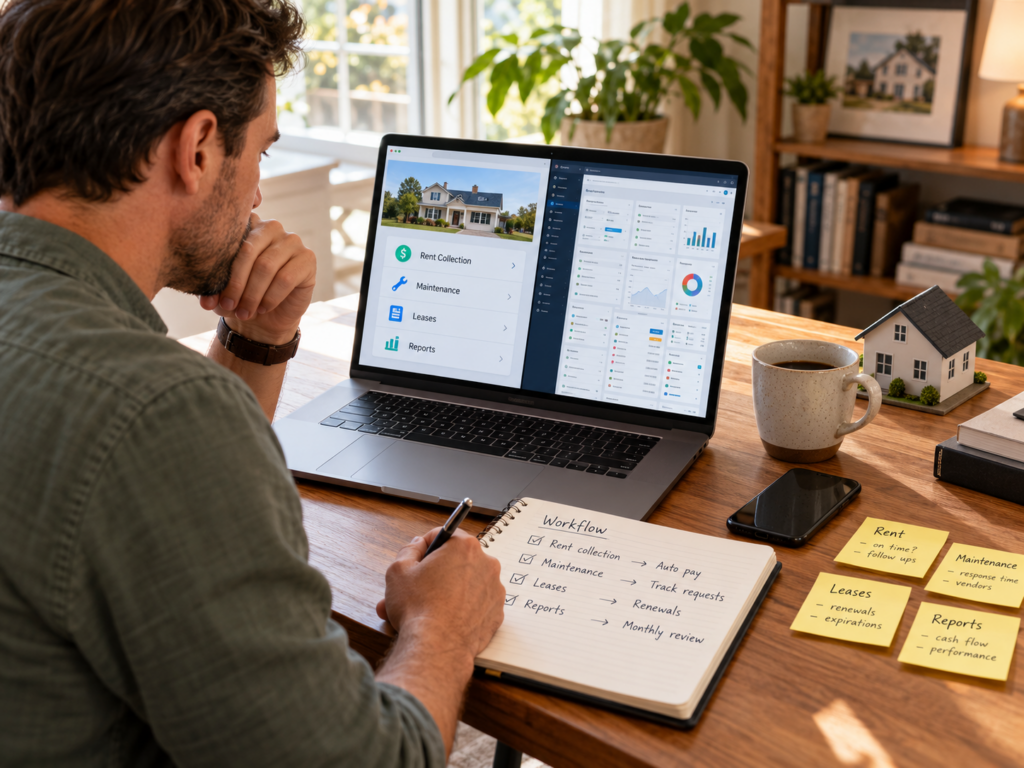
If the only real problem is rent collection, you may only need a payment platform. If maintenance, tenant communication, leasing, and accounting are all scattered, a broader property management system may make sense. A landlord with three single family homes in Dallas, Fort Worth, or Frisco does not need the same setup as a company managing hundreds of units. Buy for the operation you have now, with enough room to grow.
When you compare platforms, focus on the features you will actually use every week. Online payments, maintenance tracking, tenant screening, document storage, messaging, and basic financial reporting cover most small landlord needs. Then test the workflow. Can you add a property without watching an hour of training videos? Can a tenant submit a repair request from a phone? Can you find the lease in a few clicks? If the system feels heavy during a free trial, it will probably feel heavier when the summer maintenance calls start piling up.
Integration matters too, but do not chase integrations just because they exist. If you already use accounting software, it may be useful for the rental platform to connect with it. If you list vacancies on major rental sites, listing syndication may save time. If you use a separate business phone or smart access system, decide whether the connection actually improves the workflow. A long list of integrations has no value if none of them solve a problem you have.
Look at the full cost, not just the price on the home page. Some platforms charge a monthly subscription, some charge by unit, and some place fees on optional services. Screening, payments, faster payouts, electronic signatures, or premium support can change the total. Run the cost against your actual portfolio. A service that is inexpensive at two properties may look very different at ten, while another platform may become a better value as you grow.
The tenant side matters as much as the landlord dashboard. If the portal is confusing, tenants will go around it and text you instead. Try the process from the renter side if the demo allows it. Paying rent, uploading a maintenance photo, finding a lease, and receiving a message should be simple. The best system is the one both sides will actually use.
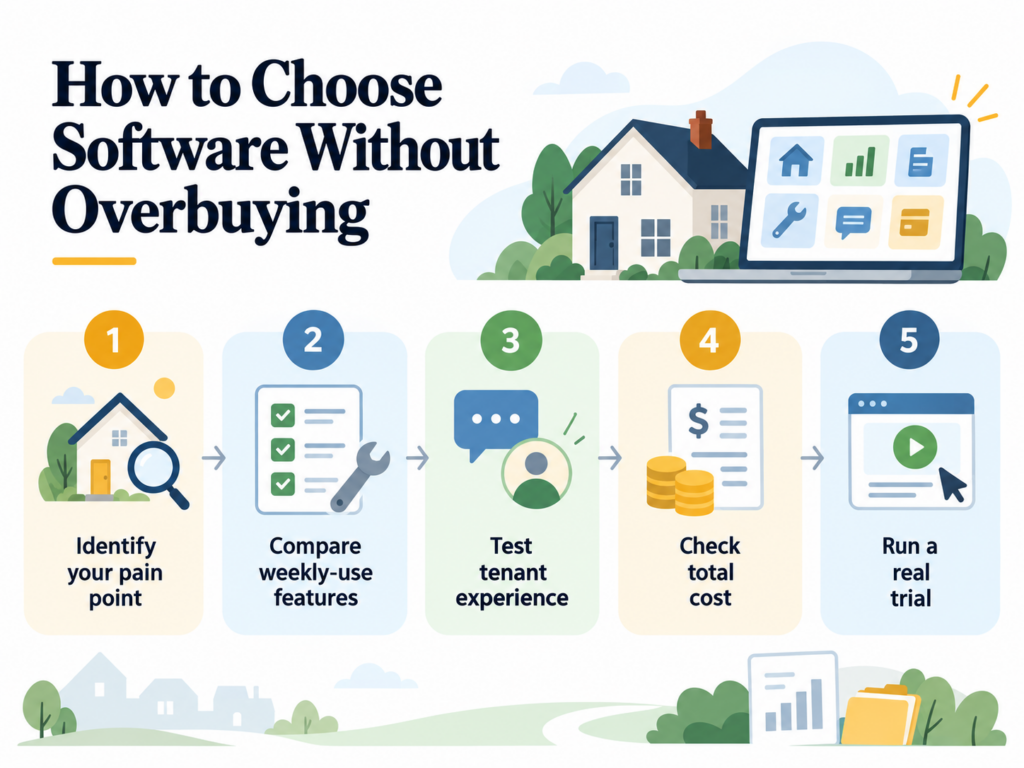
Take advantage of demos and trial periods, but test them with real tasks. Add one property. Upload a real lease copy. Create a sample maintenance request. Record a payment. Export a report. Check the mobile version while you are away from your desk. For a DFW and North Texas landlord, also think about how the platform handles work when you are coordinating vendors across a wide service area or dealing with several AC, roof, hail, or freeze related calls at the same time.
Good software should remove steps, not add them. If a platform solves the problems that are costing you time and gives you a cleaner record of the business, it may be worth paying for. If you are buying it because the feature list looks impressive, keep shopping. Small landlords usually benefit more from a simple system used consistently than from a powerful system they avoid opening.