
This Content Is Only For Subscribers
Most tenants can tolerate a repair taking a little time. What they have a much harder time tolerating is not knowing what is happening.
A tenant reports a leak on Monday. They hear nothing Tuesday. By Wednesday they are wondering whether you even saw the message. By Thursday they are angry. The repair itself may still be moving through a perfectly reasonable schedule, but the tenant has spent three days filling the silence with assumptions.
Welcome back to “Ask a Property Manager.” If there is one communication habit that makes maintenance easier, it is giving updates before the tenant has to ask for them.
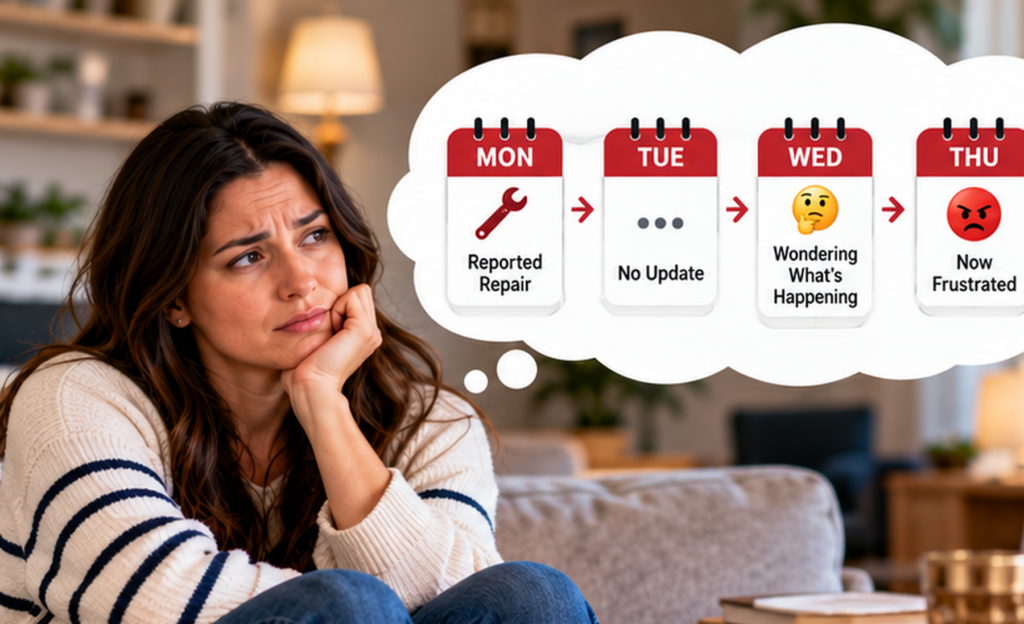
The Tenant Is Waiting in the House
Landlords sometimes forget that a repair looks different from the tenant side. You may know that the plumber called back, the part was ordered, and the vendor is coming Friday. The tenant does not know any of that unless you tell them.
In DFW and North Texas, this matters even more during long stretches of summer heat, after severe thunderstorms and hail, or following a hard freeze when HVAC companies, roofers, plumbers, and restoration crews can get backed up. A delay is frustrating, but uncertainty usually makes it worse.
The tenant does not need a running commentary every hour. They need enough information to understand that the request is active and what happens next.
Use Three Simple Updates
The first update is acknowledgment. As soon as you receive the repair request, confirm that you have it. A simple message works: “I received the request about the kitchen sink. I am contacting the plumber today and will update you when I have a schedule.”
The second update is the plan. Once the vendor responds, tell the tenant who is coming, the expected day or time window, and whether the vendor will contact them directly. If a part has to be ordered, say that too.
I also tell tenants anything they need to do before the visit. Move items away from the sink, secure pets, make sure the side gate is unlocked, or confirm whether an adult will be home. Clear access instructions save the vendor time and reduce the chance that a repair gets pushed back because nobody could get to the problem.
The third update is the closeout. After the repair, ask whether the issue appears resolved. This is a small step, but it catches problems that a vendor may believe are finished even when the tenant is still seeing a leak, noise, or cooling issue.
Bad News Is Still an Update
This is the part landlords tend to avoid. The contractor is delayed. The AC part did not arrive. The roof repair is bigger than expected. There is no good news, so the landlord says nothing.
I would rather send an honest update. “The technician confirmed the motor needs to be replaced. The part is expected Thursday, and I will check with the company again Thursday morning. I will update you by noon even if the schedule has not changed.”
That last sentence is important. It gives the tenant a time when they know they will hear from you again. You are not promising the repair will be completed by noon. You are promising communication.
Be Realistic About North Texas Vendor Schedules
If the property is in Dallas, Fort Worth, Arlington, Plano, Frisco, McKinney, Denton, or another North Texas community, vendor travel and service territory can affect timing. After a major hailstorm or during the first serious heat wave, good contractors may be booked across several parts of the Metroplex. Tell the tenant what the vendor actually said instead of giving a best case guess.
If the repair affects basic comfort or could create additional damage, look for reasonable temporary steps while the permanent repair is pending. The right response depends on the situation, but communication should never be the part that goes missing.

Close the Loop
The best maintenance communication feels almost boring. Request received. Vendor scheduled. Delay explained. Repair completed. Tenant confirms it is working. That predictability builds trust.
I have seen tenants stay remarkably patient through difficult repairs when they know the landlord is engaged and keeping them informed. I have also seen minor repairs turn into major disputes because nobody sent a thirty second update. You cannot control every vendor delay or every failed part. You can control whether the tenant spends the week wondering if anyone is paying attention.