
This Content Is Only For Subscribers
Entry requests are one of those routine property management tasks that can become unnecessarily tense when the communication is sloppy. A landlord may have a perfectly legitimate reason to enter, but that does not mean the tenant should receive a vague message ten minutes before a vendor arrives.
For landlords across DFW and North Texas, entry often comes up around air conditioning service, plumbing repairs, pest control, roof and fence inspections, insurance visits, and storm related checks. A consistent process makes those visits easier for the tenant, easier for the vendor, and easier to document if a disagreement develops.
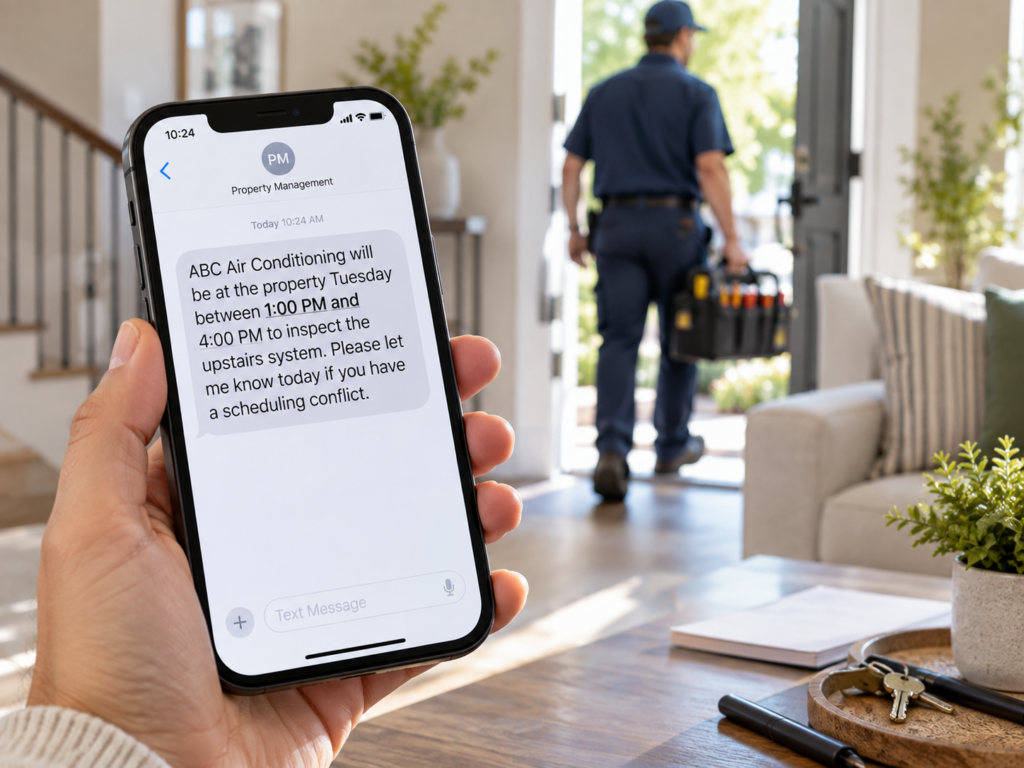
Texas Does Not Have One Universal Entry Notice Period
Texas does not have a statewide statute that sets one required number of hours of notice for every routine landlord entry. That makes the lease especially important. Many residential leases describe when the landlord may enter and what contact or notice should occur before entry.
Because the lease controls much of this issue, avoid treating 24 hours or 48 hours as a universal Texas legal rule. Those timeframes can be useful business practices for nonurgent visits, but the correct standard starts with the lease, the reason for entry, and the facts of the situation.
Emergencies are different. An active water leak, fire, or another condition requiring immediate action may justify entry without the same advance scheduling that would make sense for a routine inspection. The key is to reserve emergency treatment for actual emergencies rather than using it as a shortcut.
What a Good Entry Message Should Say
A useful entry message should answer the questions a tenant is likely to have before they need to ask. State the date, give a reasonable arrival window, explain the purpose, and identify the person or company that will enter. If the vendor may arrive without you, say so.
A message such as, ‘ABC Air Conditioning is scheduled for Tuesday between 1 PM and 4 PM to inspect the upstairs system. The technician may enter using the landlord access method permitted by the lease. Please let me know today if there is a serious scheduling conflict,’ is much better than, ‘AC guy coming tomorrow.’
The method matters too. Email, a management portal, and text messages can all create useful records, depending on the lease and the type of communication. Do not assume that email or text automatically satisfies a formal notice requirement. For routine entry scheduling, use the channel you have established with the tenant and keep a copy.

When the Tenant Pushes Back
A tenant may ask for a different time, may be uncomfortable with an unaccompanied vendor, or may refuse access entirely. Do not turn the first objection into a confrontation. Check the lease, explain the legitimate reason for entry, and see whether a reasonable scheduling adjustment solves the problem.
If access continues to be denied and the lease gives the landlord a right to enter for that purpose, document the refusal and move into the lease enforcement process that fits the facts. A denial may amount to a lease violation, but that conclusion should come from the lease and the circumstances, not from frustration in the moment. Forcing entry during a nonemergency dispute is rarely the smart next step.
DFW geography can make this harder than it sounds. A vendor may be covering calls from Dallas to Fort Worth, Arlington, Plano, Frisco, McKinney, or Denton and give a broad arrival window, while the tenant may need to secure pets, open a gate, or provide access after a storm. That is another reason to avoid vague notices. If the technician is delayed, send an update. If the vendor cannot enter because a lock, alarm, pet, damaged gate, icy conditions, or another access problem prevents entry, document what happened and what the next appointment will be. A good entry record should show not only that notice was sent, but also what the landlord and vendor actually encountered at the property.
Keep the Process Boring
The best entry process is predictable. Use the same style of notice whether the rental is in Dallas, Fort Worth, Arlington, Plano, Frisco, McKinney, or Denton. Give useful details. Keep the tone neutral. Save the message. When tenants know what to expect and vendors know how access will work, entry stops feeling like a personal conflict and starts feeling like routine property management.