
This Content Is Only For Subscribers
Most landlords have had the same experience. You remember a tenant reporting something months ago, but finding the exact conversation takes far too long. The water heater issue is somewhere between a rent reminder, a vendor scheduling text, and a photo the tenant sent after dinner. You know you responded. You may even know how the repair ended. What you do not have is one clean record that shows the full sequence.
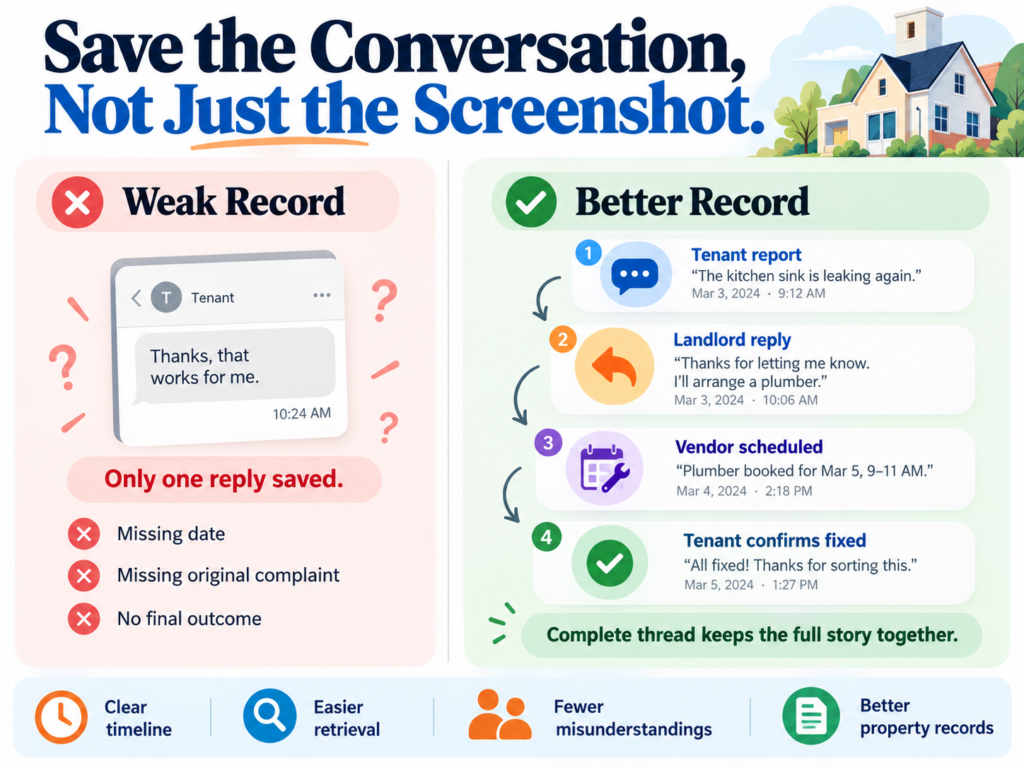
Saving messages is not just about keeping more screenshots. The useful record is the conversation in context. A sentence such as I will take care of it means very little by itself. You need to know what the tenant reported, when they reported it, what you said next, what vendor was contacted, and whether the tenant later confirmed the problem was resolved.
Save the Conversation, Not Just the Line You Like
A single screenshot can create as many questions as it answers. It may leave out the date, the earlier message, or the response that came afterward. If a repair timeline later becomes important, the complete thread is much easier to understand than a folder full of isolated images.
Imagine a tenant in Fort Worth reports a ceiling stain after a severe storm. You acknowledge the message, determine whether there is active water intrusion or an older stain, schedule the right vendor, and later get confirmation that the area stayed dry after the repair. If you save only your first reply, you have preserved the least useful part of the story. The better record includes the original notice, your response, the vendor step, and the closeout.
Know Which Messages Deserve Extra Attention
You do not need to turn every good morning text into a permanent file. I would pay closer attention to repair reports, payment arrangements, lease questions, approvals, complaints, notices, access discussions, and any conversation where the tenant and landlord could remember the agreement differently later.
Maintenance conversations are especially worth keeping together. A DFW or North Texas house may have a long cooling season, roof or fence damage after hail and high winds, plumbing trouble after a hard freeze, or irrigation problems during a dry stretch. Those issues can involve several messages over several days. The record is much more useful when the entire chain stays connected instead of being split between text, email, photos, and a vendor invoice.
Financial exceptions also deserve a complete record. If you agree to a payment date, waive a fee, or approve some other accommodation, confirm exactly what was agreed to and preserve the surrounding conversation. The goal is not to make every interaction formal. It is to make sure an exception does not depend on two people remembering a casual exchange the same way six months later.
Use a Filing Method You Will Actually Maintain
For email, the easiest approach is usually to keep the full thread and file it under the property and tenant. For portal communication, keep the message history intact and make sure you know how to export or save it if you ever change systems. For business text messages, decide how important threads will be preserved outside the phone if the platform does not give you an easy permanent archive.
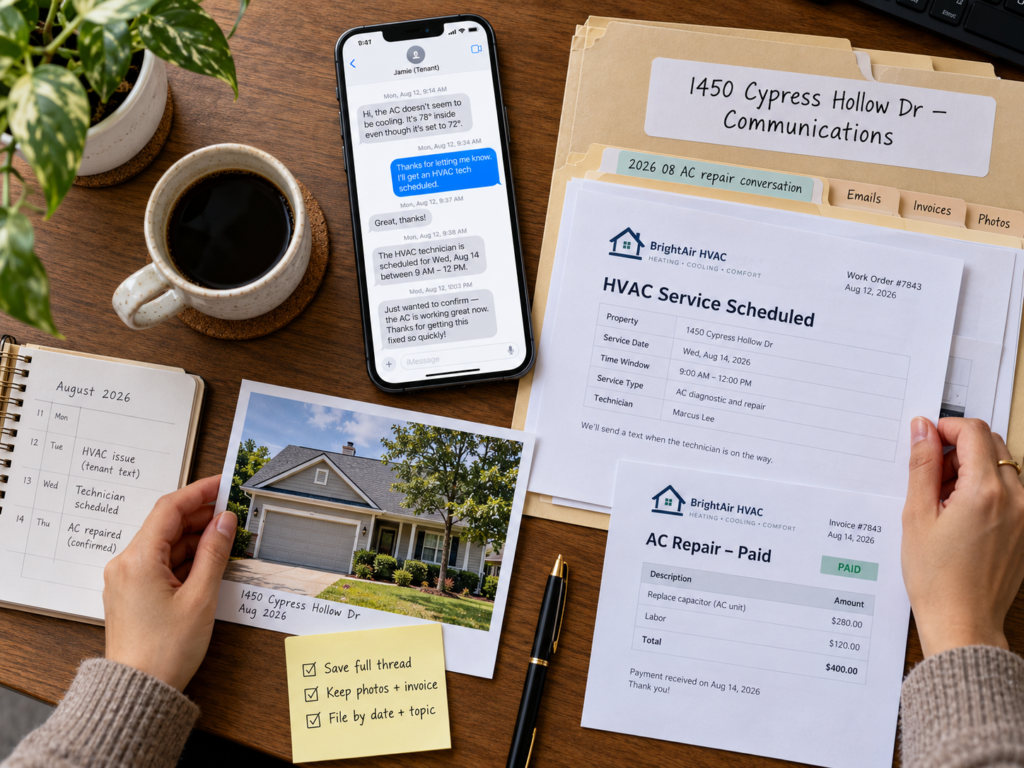
A simple method works well. Create one communication folder for each property. Inside it, save important threads by date and topic. A file name such as 2026 07 AC repair conversation is much easier to find later than Screenshot 4837. If the issue also has photos, invoices, or a work order, keep those records in the same property folder or use a naming system that clearly connects them.
Do not wait until move out to organize a year of communication. File the important thread when the issue closes. That is when you still remember what it was about, which vendor handled it, and whether there is anything else that belongs with it.
Preserve Enough Context to Tell the Story
The test I use is simple. Could someone who was not part of the conversation understand what happened from the record you saved? They should be able to see the issue, the response, the next step, and the outcome without guessing.
That standard is useful whether you are reviewing a repair, discussing a deposit question with a former tenant, handing records to a property manager, or working with an attorney. You do not need a complicated archive. You need complete threads, clear labels, and a habit of filing important conversations while they are still easy to identify.
For a small DFW and North Texas portfolio, that habit can save more time than another piece of software. The technology only needs to make the record easy to keep and easy to retrieve. The real value comes from preserving enough context that you never have to rebuild the story from memory.