This Content Is Only For Subscribers
Texting is useful in property management because tenants read texts quickly and vendors answer them while they are on the road. The problem starts when the entire history of a tenancy lives inside one long message thread on a personal phone. A text message can be evidence, and sometimes it can matter legally, but a phone thread is still a poor place to keep the official record of a rental.
Welcome back to Landlord Legal Lowdown. This month, we are looking at how DFW and North Texas landlords can use texting without letting it become the filing system.

A Text Can Matter, but the Rules Still Matter
Texas law does not treat every type of notice the same way. Some notices are controlled by the Property Code, some by the lease, and some by both. That means the right question is not simply whether a text is in writing. The right question is whether that communication satisfies the rule that applies to that specific issue.
Repair requests are a good example. Under Texas Property Code Section 92.052, a tenant’s repair notice must be in writing only if the lease is in writing and requires written notice. If your lease directs tenants to a portal or email, train them to use that channel. But if a tenant texts you that the air conditioner has failed during a North Texas August, or that a roof started leaking after a severe storm, do not assume the message has no legal significance simply because it arrived by text. Preserve it, respond appropriately, and move the repair into your normal work order system.
Formal enforcement notices are different. A Notice to Vacate has delivery rules in Section 24.005, and a lease may establish delivery requirements for other notices. A text about an unauthorized pet may still be useful evidence that the issue was discussed, but it may not be the formal notice your lease requires before you take the next step. Read the lease and use the correct notice method.
Casual Replies Can Create Confusion
Texting also encourages landlords to answer too quickly. That is where small misunderstandings can become bigger ones. A quick reply can sound more definite than you intended, especially when the message concerns rent, a concession, a lease rule, or permission to do something at the property.
Suppose a tenant says they will be late with rent and you reply, “That is fine, pay me next week.” You may have intended to be polite. The tenant may understand that message as a specific agreement about the payment date or enforcement for that month. Whether it legally changes the lease depends on the facts, the lease language, and the parties’ conduct, but the text has now created evidence that must be explained.
A safer response is clear and narrow. If you are granting a one time concession, say exactly what you are agreeing to and put the terms into a written payment agreement when appropriate. If you are not changing the lease, avoid casual language that suggests otherwise. A few extra minutes now can save a much longer argument later.
The Bigger Problem Is Retrieval
Even when a text message helps your position, you still need to be able to produce it. Tenants may text about the AC, a loose fence board, rent, a parking complaint, and a vendor appointment in the same thread. Months later, finding the one exchange that matters can be surprisingly difficult.
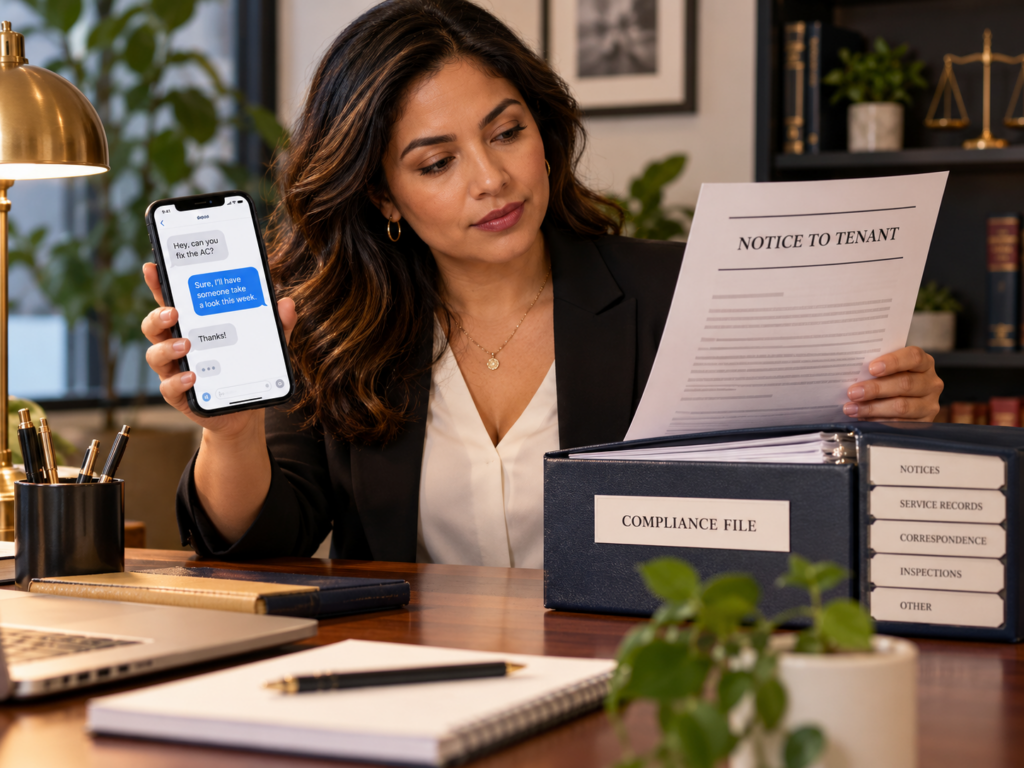
Screenshots are better than nothing, but they are not a great long term system. They can omit dates, names, or surrounding context, and they are easy to scatter across a camera roll. A better practice is to move important communications into the tenant file. Save an export, PDF, email summary, portal note, or written follow up that identifies the property, the date, and the issue.
This matters even more for landlords with houses spread across Dallas, Fort Worth, Arlington, Frisco, McKinney, Denton, or other North Texas communities. When several vendors and tenants are communicating at once, your phone can become a pile of unrelated conversations very quickly.
Use Texts for Speed, Not Storage
There is nothing wrong with texting a tenant that the plumber is twenty minutes away or asking whether a gate is unlocked for an HVAC technician. Texting is excellent for coordination. It is less reliable as the only record for rent agreements, repair history, lease enforcement, or other issues you may need to reconstruct later.
Set a simple rule for yourself. If a text could matter to the lease, the money, the condition of the property, or a future dispute, move it into the property file. If the lease requires a particular communication method, use that method as well. You do not need to fight with tenants about how they communicate. You just need a system that keeps the important record somewhere more permanent than your phone.
The goal is not to eliminate texting. The goal is to make sure a convenient conversation does not become the only evidence you have.