Home Blog Page 10

Red Flags and Red Ink: The Rental Fraud Risks Every Texas Landlord Needs to Know

0

Rental fraud is not a new problem. Landlords have been dealing with dishonest applicants for as long as there have been rental properties. What has changed, dramatically, is how easy it has become to commit it. A fake pay stub that once required a skilled forger can now be generated online in under ten minutes for less than fifty dollars. Convincing bank statements can be downloaded from template sites and edited in free software. Entire fake identities can be assembled from real and fabricated information that passes a cursory review without raising a single flag.

A 2023 survey by the National Multifamily Housing Council found that 80 percent of landlords and property managers had caught renters misrepresenting themselves on rental applications within the prior year, and 84 percent had encountered falsified references or supporting documentation. For private family home landlords in Texas, who typically do not have the resources of a large property management company, the risk is just as real and the consequences are often more personal.

Understanding the types of fraud that exist, where they show up in the application process, and how to protect yourself is not paranoia. It is basic due diligence.

Document Fraud: The Most Common and Most Dangerous

Document fraud is the most prevalent form of rental application fraud, and it is estimated that roughly one in eight rental applications contains falsified or altered documents. The most common targets are pay stubs and bank statements, the two pieces of paper most landlords rely on most heavily to verify income.

Pay stub fraud has become alarmingly accessible. Dozens of websites openly advertise pay stub generation services, offering customizable templates that can be populated with any employer name, income figure, and date the applicant chooses. The resulting documents often look indistinguishable from legitimate pay stubs to the untrained eye. The fonts are right, the formatting is professional, and the numbers are whatever the applicant needs them to be. Bank statement fraud follows a similar pattern, with applicants editing PDF files to inflate balances, remove overdraft entries, or eliminate records of returned payments. Some go further, using entirely fabricated statements that mimic the formatting of major national banks. Without independently verifying the information, a landlord reviewing these documents has no reliable way to know what is real.

This is precisely where professional screening services with experienced processors have a significant advantage over a landlord working alone. Go4Rent’s processors are specifically trained to identify fraudulent documents and review enough applications each month to recognize the subtle formatting irregularities and inconsistent details that often distinguish a fabricated pay stub from a legitimate one, pattern recognition that is nearly impossible to develop without exposure to a high volume of both genuine and fraudulent submissions.

“We see fake pay stubs and altered bank statements more than most landlords would ever expect,” says Mark G., office manager at Go4Rent. “The documents look legitimate at first glance, the right logo, the right layout, everything formatted correctly. But when our processors call the employer directly to verify income, the employer lets us know that the applicant never worked there, or they were let go months ago. That’s fraud, and it’s exactly why manual verification exists.”

Other documents that are frequently falsified include W-2 forms, offer letters, and tax returns. Some applicants go so far as to create fake employer contact information, listing a phone number that routes to a friend or family member who will pose as an HR representative. This is why verification services that independently source employer contact information, rather than relying on what the applicant provides, are so critical.

Fake IDs and Fraudulent Social Security Numbers

One of the more alarming trends in rental application fraud involves applicants who do not just misrepresent their finances, they misrepresent who they are entirely. The use of fake government-issued identification and fraudulent Social Security numbers has become an increasingly common tactic, particularly among applicants who have prior evictions, criminal histories, or other barriers that would otherwise disqualify them.

A fraudulent driver’s license or state ID can be obtained through online channels with relative ease, and the quality of these documents has improved significantly in recent years. To a landlord reviewing a photocopy or a smartphone photo of an ID, a convincing fake may be indistinguishable from a legitimate one. Some applicants pair a fake ID with a Social Security number belonging to a real person with a clean credit history, generating a favorable credit report under a false name. Others use fabricated numbers that have never been issued, or numbers belonging to deceased individuals, which can slip through automated screening systems that do not cross-reference identity data rigorously.

The consequences for a landlord who unknowingly signs a lease with someone using a false identity can be severe. If problems arise, non-payment, property damage, or criminal activity, the person named on the lease may not legally exist, or may be an innocent third party whose identity was stolen. Pursuing legal remedies, including eviction, becomes significantly more complicated when the true identity of the occupant is in question.

Requesting a government-issued photo ID in person, rather than accepting a digital copy, allows for a closer inspection of security features such as holograms, microprinting, and raised lettering that are difficult to replicate convincingly. Running the applicant’s name, date of birth, and Social Security number through an identity verification check, rather than relying solely on a credit pull, can flag mismatches between the name on the application and the name associated with that number in federal records. SSN trace reports map the history of addresses and names tied to a given number and can surface inconsistencies that suggest fraud. A Social Security number that returns a credit profile under a different name, or one that does not match the applicant’s stated history in any meaningful way, warrants serious scrutiny before proceeding.

Go4Rent’s processors are trained specifically in identity verification and experienced in spotting the warning signs of fraudulent identification and fake Social Security numbers. Where an automated system may simply pull a credit report and move on, a trained processor knows to question a mismatch between the name on the ID and the SSN in federal records, and to escalate that discrepancy before it becomes a signed lease.

Identity Fraud: Hiding Behind Someone Else

Identity fraud in the rental context typically takes one of two forms: using a stolen identity or borrowing a family member’s identity with or without their knowledge. Stolen identity fraud allows a fraudster to benefit from a victim’s clean credit history and employment record while concealing their own history of evictions, criminal activity, or non-payment. The legitimate tenant whose identity was used often does not discover it until they try to rent elsewhere and find a lease they never signed on their record.

Family identity fraud is more common than most people realize. An applicant with a poor credit history or a prior eviction may use a sibling’s, parent’s, or spouse’s identity, sometimes with that person’s cooperation, sometimes without it, leaving the landlord with a lease signed by someone who is not actually living in the property. A more sophisticated variant is synthetic identity fraud, where an applicant combines a legitimate Social Security number with fabricated personal details to create a blended identity that does not match any single real person. These synthetic identities are particularly difficult to catch because they do not trigger the same alerts as outright stolen identities, and they are becoming more prevalent as digital tools make identity construction easier.

Fraudulent References: The Fake Landlord Problem

A previous landlord who enthusiastically vouches for an applicant is reassuring. A previous landlord who is actually the applicant’s college roommate playing a role is something else entirely.

Fraudulent references are a widespread and under-appreciated form of rental fraud. An applicant with a history of late payments, property damage, or a prior eviction has every incentive to ensure their “previous landlord” tells a different story. All it takes is a willing friend and a few minutes of coaching. The red flags are there if you know what to look for. A reference who cannot provide specific details about the property, the lease term, or the security deposit amount is a warning sign. A reference whose phone number does not match any listed property management company or whose name does not appear in public property ownership records should prompt further investigation.

Professional verification services are trained specifically to probe for these inconsistencies. They independently confirm that the person being contacted actually owns or manages the property in question, by cross-referencing public property ownership records, before treating the reference as credible. A private landlord making the same call has no reliable way to perform that cross-check in real time.

Nondisclosure: The Fraud of Omission

Not all rental fraud involves fabricated documents or stolen identities. Some of it is simply a matter of leaving things out. Nondisclosure fraud occurs when an applicant deliberately omits information they know would result in a denial, a prior eviction, a previous address with a negative rental history, a co-occupant with a criminal record, or undisclosed pets in a no-pet property.

This type of fraud is harder to detect because it does not leave an obvious paper trail. It relies on the landlord not asking the right questions or not looking closely enough at gaps in the application. An applicant who claims to have lived at their current address for five years but cannot provide a landlord reference before that, and conveniently cannot remember where they lived previously, is exhibiting a classic nondisclosure pattern. A thorough rental history verification covering a full two years, with careful follow-up on any gaps or inconsistencies in the timeline, is the most effective defense against this type of fraud.

Where Fraud Happens Most

Rental fraud tends to cluster around moments of high demand and low scrutiny. In competitive Texas markets like Houston, Dallas, Austin, and San Antonio, landlords under pressure to fill vacancies quickly are more likely to cut corners on verification. Fraudsters know this and exploit it. Fraud also concentrates at the income threshold, where applicants who fall just below the standard three-times-rent requirement need only adjust a number on a pay stub rather than fabricate an entirely new identity.

Single-family home rentals are disproportionately targeted because private landlords are perceived, often correctly, as less likely to have sophisticated verification systems than large apartment communities. A fraudster deterred by a corporate property management company’s document authentication software will often redirect their efforts toward the private landlord down the street.

Protecting Yourself

The most effective protection against rental fraud is a screening process that does not rely solely on what the applicant provides. Automated credit and background checks are a necessary starting point, but they are not sufficient on their own. Manual employment verification using independently sourced contact information, rental history verification involving direct contact with previous landlords, and careful scrutiny of all submitted documents are the layers that close the gaps.

Working with a dedicated third-party screening service like Go4Rent is one of the most effective steps a Texas landlord can take. Go4Rent’s processors are specifically trained to identify fraudulent documents, fake identities, and suspicious Social Security numbers, and they bring to every application a level of pattern recognition that only comes from reviewing a high volume of both legitimate and fraudulent submissions. Where a private landlord might see a polished pay stub and move on, a Go4Rent processor asks the questions that catch fraud before it costs you months of lost rent and legal fees.

Trust the process, not the presentation. A charming applicant and a stack of professional-looking documents are not proof of anything. Verification is.

This article is intended for informational purposes. Landlords are encouraged to consult a licensed attorney for guidance specific to their situation and jurisdiction.

Getting It in Writing: Lease Tips Every Texas Landlord Should Know

0

A handshake and a good feeling about someone are not a lease agreement. Neither, frankly, is a one-page form you found online five years ago and have been recycling ever since. Your lease is the single most important document in your relationship with a tenant, it defines the rules, protects your property, establishes your legal standing, and can mean the difference between a smooth tenancy and a costly dispute. For private family home landlords in Texas, getting the lease right is not just good practice. It is essential.

The good news is that Texas law gives landlords significant flexibility in structuring lease agreements. The state does not impose rent control, does not cap security deposits, and generally allows landlords to set reasonable terms as long as those terms do not strip tenants of rights guaranteed under the Texas Property Code. The less-good news is that this flexibility comes with responsibility. A poorly written lease, one with vague language, missing disclosures, or unenforceable clauses, can leave you exposed in ways you may not discover until something goes wrong.

Here is a practical guide to the most important elements of a solid Texas residential lease.

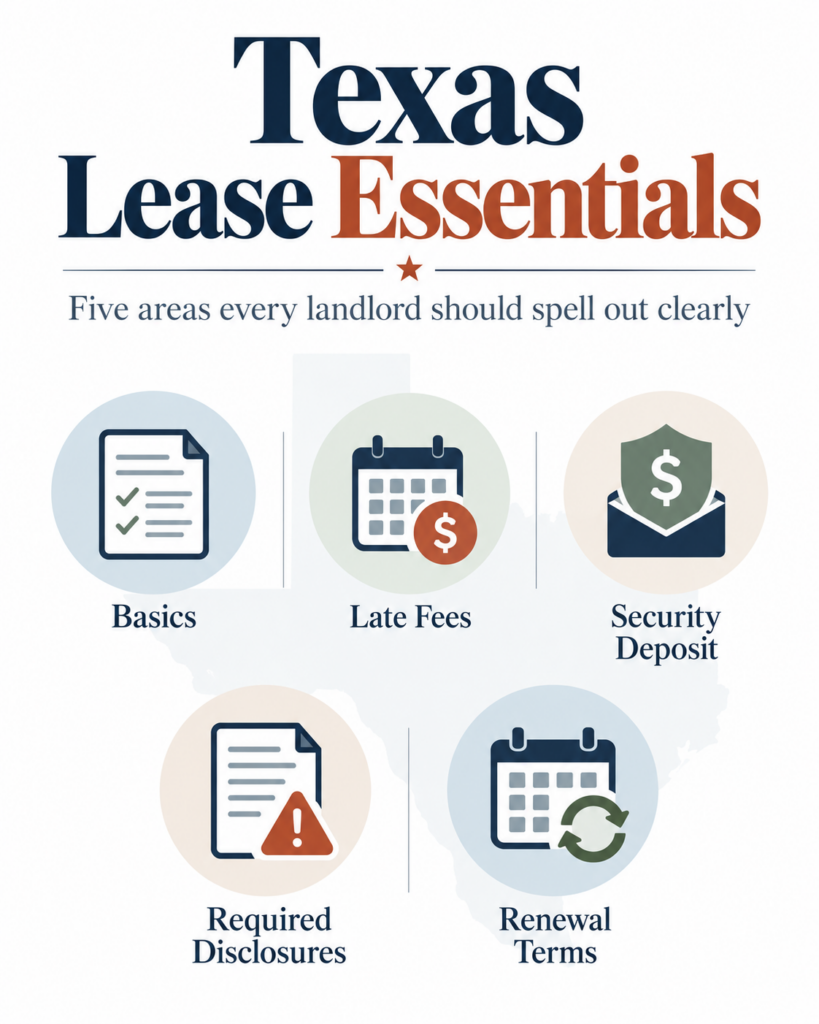
Start with the Basics and Be Specific

It sounds obvious, but a surprising number of lease disputes arise from ambiguity in the most fundamental terms. Your lease should clearly identify the full legal names of all adult tenants who will occupy the property, the complete property address, the exact lease start and end dates, and the monthly rent amount. Do not leave room for interpretation on any of these points.

Specify the rent due date and, critically, the grace period. Texas law requires a minimum two-day grace period before a landlord can charge a late fee, meaning if rent is due on the first, you cannot assess a late fee until after the third . State this clearly in the lease so there is no confusion about when a payment becomes late.

Also be explicit about who is authorized to occupy the property. If you are renting to a couple, both names should be on the lease. If they have children, note that. Unauthorized occupants are a common source of friction, and your lease is the document that defines the boundary.

Late Fees: Know the Cap and Put It in Writing

Texas law allows landlords to charge late fees, but those fees must be “reasonable” and must be specified in the lease, you cannot simply add a late fee after the fact . For properties with four or fewer units (which covers most private family home landlords), the late fee cannot exceed 12 percent of the monthly rent. For properties with five or more units, the cap drops to 10 percent.

Do the math before you write the lease. If you are charging $1,800 per month in rent, your maximum late fee is $216. Some landlords prefer a flat daily fee after the initial late charge; that is permissible, but the total must still stay within the legal cap. Whatever structure you choose, spell it out precisely in the lease. A vague clause like “a late fee will apply” is not enforceable.

Security Deposits: No Cap, But Clear Rules

Unlike many states, Texas does not limit how much a landlord can charge for a security deposit. One to two months’ rent is the most common range for single-family homes, but the amount is ultimately up to you and the market. What Texas law does regulate strictly is what happens to that deposit at the end of the tenancy.

You are required to return the security deposit, minus any lawful deductions, within 30 days of the tenant surrendering the premises . If you withhold any portion, you must provide the tenant with a written, itemized accounting of the deductions. Failing to comply with this timeline can expose you to significant liability: a landlord who retains a deposit in bad faith can be held liable for $100, three times the amount wrongfully withheld, and the tenant’s attorney’s fees.

Your lease should clearly state the deposit amount, the conditions under which deductions may be made, and the requirement that the tenant provide a forwarding address in writing. That last point matters, the 30-day clock does not start until you have the forwarding address.

Required Disclosures: Do Not Skip These

Texas law mandates several disclosures that must be included in or accompany every residential lease. Missing any of them can create legal exposure, so treat this as a checklist.

Flood Disclosure is one of the most important and most frequently overlooked. As of January 1, 2022, all residential leases in Texas must include a flood disclosure indicating whether the landlord is aware of the property being in a 100-year FEMA-designated floodplain and whether flooding has damaged the property at any point during the last five years . Given how many Texas communities have experienced flooding in recent years, from Houston to the Hill Country, this disclosure is not a formality. It is a genuine legal obligation.

Lead-Based Paint Disclosure is required for any property built before 1978. Federal law mandates that landlords distribute an EPA-approved information pamphlet and disclose any known lead hazards. This disclosure must be signed by the tenant and kept on file.

Landlord/Agent Identity must be disclosed in writing. Texas Property Code Section 92.003 requires landlords to provide the name and contact information of the property owner or authorized agent who manages the property and collects rent . This can be included directly in the lease.

Tenant Remedies regarding repairs must also be disclosed. Texas law gives tenants the right to seek remedies if a landlord fails to make required repairs, and landlords are required to inform tenants of this right.

“I can’t tell you how many times I’ve seen new landlord clients come to me after a dispute, only to find that the root of the problem was a self-written lease missing a required disclosure or containing language that simply wouldn’t hold up,” says Erika Navarro, a licensed Texas Realtor in the Greater Houston area.

“The flood disclosure, in particular, has become a major issue since the 2022 requirement went into effect. If you’re not including it, you’re leaving yourself exposed. A well-written lease isn’t just about protecting yourself; it’s about being transparent with your tenant from day one. That transparency often leads to better tenancies.”

Pet Policy, Parking, and Other Specific Terms

The Texas Property Code does not extensively regulate what landlords can and cannot include in a lease beyond the rights that cannot be waived. This means you have considerable latitude to set the terms that matter to your property — but those terms need to be written down.

If you allow pets, specify the types and sizes permitted, the pet deposit amount (note that this is separate from the security deposit), and any rules about where pets are allowed on the property. If you do not allow pets, say so explicitly. A vague lease that does not address pets at all leaves you with no legal footing if a tenant moves in a dog.

Parking rules, guest policies, lawn maintenance responsibilities, and rules about subletting should all be addressed. For single-family homes in Texas, it is particularly common for landlords and tenants to disagree about who is responsible for lawn care and minor maintenance. Put it in writing. If the tenant is responsible for mowing, say so. If you are providing a lawnmower, note that too.

Lease Term and Renewal: Be Clear About What Happens Next

Most Texas residential leases are written as one-year fixed-term agreements. At the end of that term, the lease either renews, converts to a month-to-month arrangement, or terminates — and your lease should specify which of those outcomes applies by default.

If the lease converts to month-to-month, Texas law requires at least 30 days’ written notice from either party to terminate . If you intend to offer a renewal at a different rent amount, specify in the original lease how and when you will communicate that. Giving tenants clarity about what to expect at the end of the lease term reduces friction and helps you avoid the awkward conversation where a tenant assumes they are staying and you assumed they were leaving.

Use a Texas-Specific Lease and Keep It Current

This point cannot be overstated. Generic lease templates from national websites may not reflect the specific requirements of Texas law, and they almost certainly do not include the state-mandated disclosures discussed above. Texas has its own statutory framework, and your lease needs to reflect it.

The Texas Association of Realtors (TAR) produces a widely used residential lease form that is regularly updated to reflect changes in state law. If you are working with a licensed Realtor, they can prepare this lease on your behalf. Several property management platforms, including Go4Rent, which offers free lease writing for Texas properties, also generate Texas-compliant leases with the appropriate addendums built in.

Whatever source you use, make sure the lease is reviewed and updated periodically. Texas law changes, and a lease that was compliant three years ago may be missing a required disclosure today. The flood disclosure requirement, for example, only took effect in 2022, which means any lease written before that date and not updated since is already out of compliance.

The Bottom Line

A well-written lease is not about being adversarial with your tenant. It is about being clear. When both parties understand the terms from day one, the rent, the rules, the responsibilities, and the consequences of violations, the tenancy runs more smoothly for everyone involved. Disputes are less likely when there is nothing to dispute.

Take the time to get your lease right before you hand over the keys. In Texas, the law gives you the tools to protect your investment. Use them.

The Preventive Maintenance System for Landlords With Only a Few Houses

Owning a small rental portfolio has real advantages. You may know each property well, communicate directly with tenants and make decisions without a complicated management structure.

That familiarity can also make it easy to manage maintenance informally. A tenant sends a text, a contractor is called, a receipt gets saved somewhere and everyone moves on.

The problem begins when several small issues overlap or when something that did not seem urgent is forgotten. A slow leak damages a cabinet. An air conditioner that had been making noise fails during extreme heat. A loose gutter allows water to collect near the foundation.

Preventive maintenance is a way to interrupt that pattern. It gives landlords a repeatable method for noticing problems, deciding what needs attention first and keeping records that will be useful later.

For landlords with only a few houses, the system does not need to be complicated. It simply needs to be consistent.

Stop Relying on Memory

Most small landlords know a great deal about their properties. They remember which house has the older water heater, which roof was replaced recently and which tenant reported a plumbing concern last winter.

Over time, however, those details become difficult to track.

Was the water heater replaced or only repaired? Did the heating contractor recommend a follow-up appointment? Was the slow drain ever inspected, or did the tenant simply stop mentioning it?

A basic maintenance record solves much of this problem. Each property should have a file containing repair dates, inspection notes, invoices, warranties, photographs and the approximate ages of major systems.

This can be managed with a spreadsheet and organized digital folders. The tool matters less than the habit of recording what happened.

The value of those records increases over time. A single repair invoice may not seem important today, but several years of history can reveal whether an appliance is becoming unreliable or whether the same problem continues to return.

Focus on the Problems That Can Grow

Preventive maintenance does not mean inspecting every minor imperfection. The goal is to concentrate on conditions that may create a safety concern, damage the building or become an expensive emergency.

Water should receive special attention. Small plumbing leaks can damage cabinets, flooring, drywall and framing before anyone realizes how serious the problem has become. During a routine property visit, look beneath sinks, around toilets, near water heaters and anywhere there are visible plumbing connections.

Heating and cooling equipment should also be watched closely. Unusual sounds, weak airflow, repeated thermostat problems and clogged drain lines may be warning signs. Routine service cannot prevent every failure, but it can reduce surprises and help equipment last longer.

Exterior drainage matters as well. Missing shingles, damaged gutters and standing water near the house may not require an emergency response, but they should not be ignored.

Inside the property, damaged electrical outlets, loose railings, broken locks, unstable steps and missing alarms should move quickly to the top of the list.

A landlord does not need to diagnose every problem personally. The goal is to notice when something has changed and decide whether a qualified professional should take a closer look.

Create a Regular Rhythm

Maintenance is easier to manage when it follows a predictable schedule.

A brief monthly review may be enough to keep small issues from disappearing. Spend a few minutes checking open repair requests, recent tenant messages and upcoming seasonal needs.

This is also a good time to confirm that completed work was documented and that contractors sent final invoices.

Property visits can then take place on a regular schedule permitted by the lease and local notice rules. Many landlords find that two routine visits each year are manageable.

One visit might take place before colder weather, while another may be scheduled before the hottest or wettest season. During the visit, check visible plumbing, alarms, filters, locks, exterior drainage and signs of moisture.

The tone of the visit matters. Tenants are more likely to cooperate when they understand that the purpose is to keep the home safe and prevent disruptions, not to criticize ordinary housekeeping.

Once a year, review the larger condition of each house. Consider the age of the roof, water heater, heating and cooling equipment and appliances. A system may still be working but close enough to the end of its useful life that the landlord should begin planning for replacement.

Make Tenant Reporting Part of the System

Tenants see the property every day. They are usually the first people to notice changes in water pressure, unusual equipment noises, stains near windows or appliances that are no longer working correctly.

The challenge is that tenants do not always report these problems quickly.

Some do not want to bother the landlord. Others assume the issue is too minor to matter or worry that they will be charged for the repair.

The reporting process should be explained clearly at move-in and reinforced during the tenancy. Tenants should know how to submit a request and which conditions require immediate notice.

Active leaks, electrical smells, sparks, gas odors, broken exterior locks, sewer backups and loss of essential services should never be left unreported.

The landlord’s reaction also affects future communication. If tenants are criticized whenever they report something minor, they may stay quiet when the next problem is serious. A calm response encourages early reporting and can prevent additional damage.

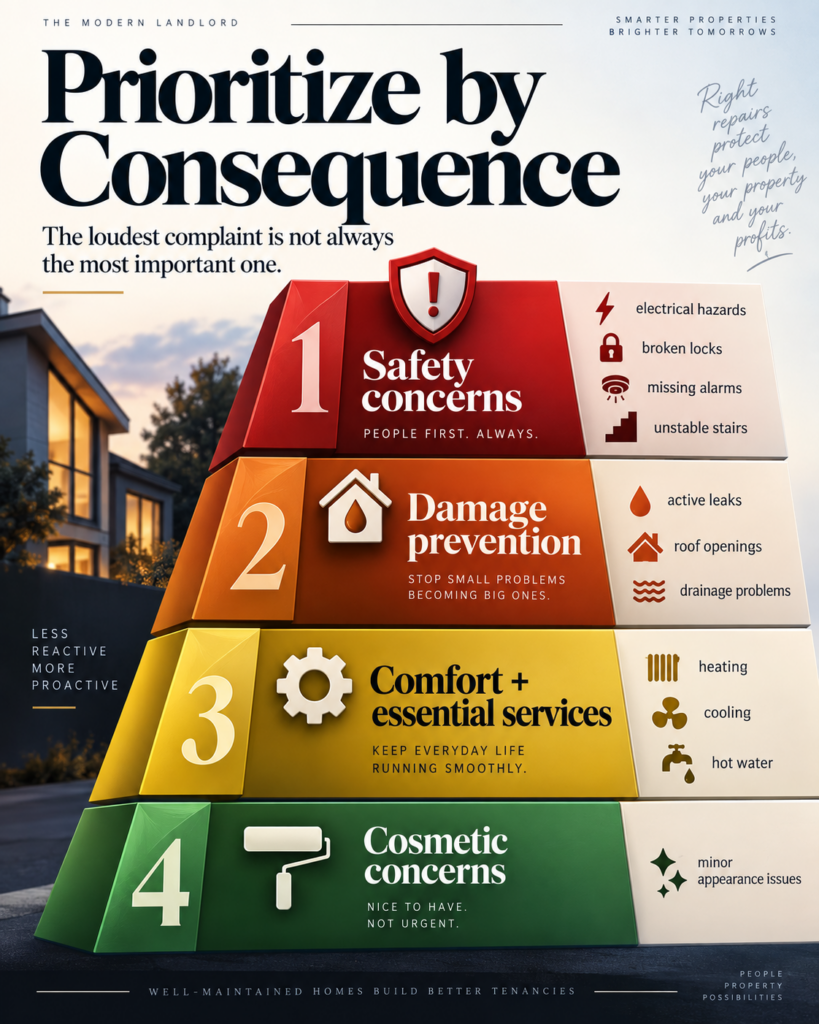
Prioritize by Consequence

When several requests arrive at once, the loudest complaint is not always the most important one.

Safety concerns should come first. These may include electrical hazards, unstable stairs, broken locks or missing alarms.

Next comes damage prevention. Active leaks, roof openings and drainage problems can become far more expensive when repairs are delayed.

Comfort issues follow, although heating, cooling, hot water and other essential services may become urgent depending on the season and local requirements.

Cosmetic concerns still matter, but they usually should not delay work that protects the tenant or the structure.

This approach helps landlords make consistent decisions and explain why one repair may need to be handled before another.

Build Contractor Relationships Early

An emergency is a difficult time to search for a plumber, electrician or heating contractor.

A small landlord does not need a large vendor network, but it helps to know dependable professionals before something fails. A backup contact is also useful because contractors may be unavailable during storms or periods of high demand.

Keep notes about the quality of each vendor’s work, response time and communication. The cheapest contractor is not always the best choice. Reliability and clear documentation may save more money over time than a slightly lower initial price.

A trusted contractor may also help identify equipment that is still functioning but likely to fail soon. That gives the landlord time to compare options instead of making an expensive decision during an emergency.

Know When to Replace Instead of Repair

Maintenance records make it easier to recognize repeated problems.

Without records, each service call may feel like a separate event. With records, a landlord may discover that the same refrigerator has required three repairs in eighteen months or that one heating system is becoming increasingly expensive to maintain.

At some point, replacement may be more practical than another temporary repair.

Planning ahead also gives the landlord better timing. Replacing equipment during a vacancy is usually easier than waiting for it to fail during an occupied lease. Scheduling work during a slower season may also provide more choices and better pricing.

Keep Useful Photos

Photographs create a visual history of the property.

Take clear pictures during move-in, routine visits and completed repairs. Include wider images that show the location and closer images that capture the condition.

Organize the photos by property and date. A file called “kitchen sink supply line before repair” will be much more useful later than an image stored under a random number.

Photos can help determine whether damage existed before a tenant moved in, whether a condition has become worse and whether a contractor completed the full repair.

Budget Before Something Breaks

Preventive maintenance cannot eliminate repair expenses. Roofs, appliances, water heaters and heating systems eventually need replacement.

The goal is to make those expenses less surprising.

Landlords should set aside part of the rental income for routine work and future replacements. The amount should reflect the age and condition of each property, not just the expenses from the previous year.

One landlord with four rental houses described the change in his approach this way: “I used to judge a good year by how little I spent on repairs. Now I judge it by whether I found problems early and avoided emergencies.”

That is the right perspective. Maintenance spending is not automatically a sign that a property is performing poorly. Timely repairs often protect the value of the home and prevent much larger losses.

Keep the System Manageable

The best preventive maintenance system is the one the landlord will continue using.

A spreadsheet, calendar and organized folder may be enough. The real system is the routine behind those tools: reviewing open concerns, visiting properties regularly, encouraging tenant reporting, saving records and planning for future replacements.

Landlords with only a few houses have an advantage. Their portfolios are small enough to understand personally. Preventive maintenance turns that personal knowledge into a dependable process.

It is not about keeping every property in perfect condition. It is about recognizing warning signs, protecting the home and responding before a manageable problem becomes an expensive emergency.

The Notice to Vacate: Why It Comes Before an Eviction

0

Few parts of owning rental property are more uncomfortable than asking a tenant to leave. Even when the reason is clear, such as unpaid rent, repeated lease violations or serious property damage, most landlords would rather solve the problem without going to court.

Unfortunately, some situations reach a point where ordinary reminders and conversations are no longer enough. When that happens, the notice to vacate becomes one of the most important documents in the eviction process.

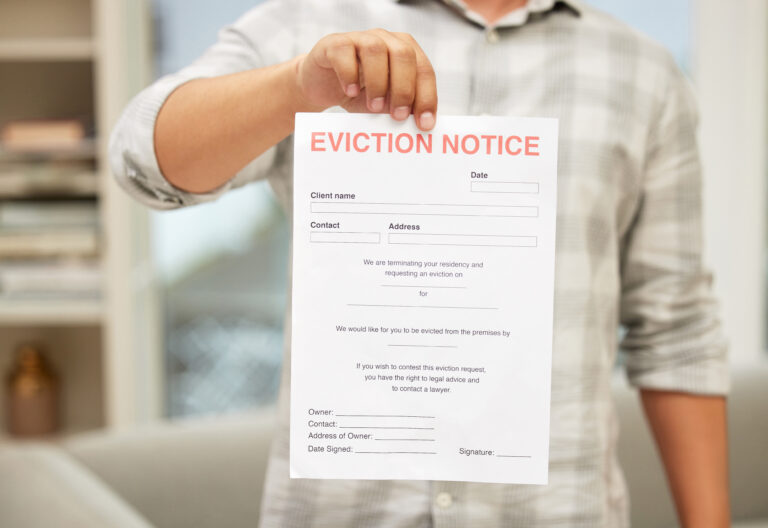
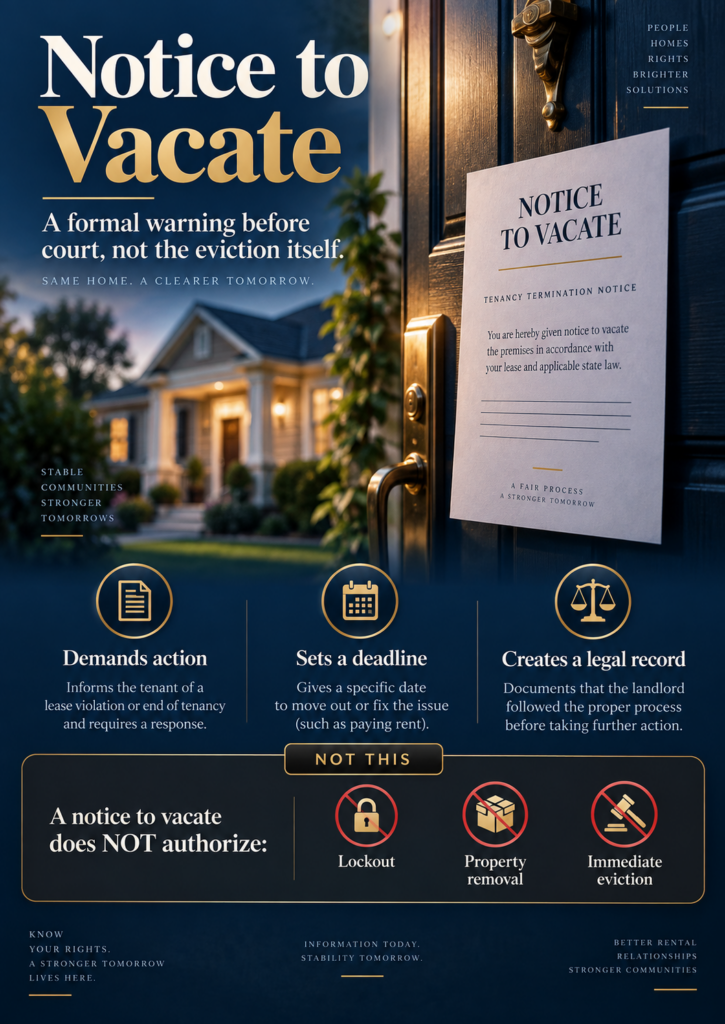
A notice to vacate is not the eviction itself. It does not give the landlord the immediate right to change the locks, remove the tenant’s belongings or physically take back the property. Instead, the notice generally tells the tenant that the landlord is terminating or enforcing the tenancy and that the tenant must either correct the problem, when permitted, or move out within a legally required period.

If the tenant does not comply, the notice may provide the foundation the landlord needs to file an eviction case.

That is why the notice should never be treated as a casual form letter. A mistake involving the wording, timing, delivery method or amount demanded can delay the case, increase legal expenses and sometimes require the landlord to begin the process again.

What a Notice to Vacate Actually Does

The terminology changes from one jurisdiction to another. Depending on the state and the reason for the proposed eviction, the document may be called a notice to vacate, notice to quit, demand for possession, pay or quit notice, cure or quit notice or notice of lease termination.

Although the names differ, the general purpose is similar. The notice formally communicates that the landlord is demanding action from the tenant and establishes a deadline before the landlord proceeds to court.

In many jurisdictions, a landlord must provide some form of written notice before filing an eviction lawsuit. The exact requirement may depend on the lease, state law, local ordinances, the type of tenancy and the reason possession is being requested. Some notices give the tenant an opportunity to correct the issue. Others simply require the tenant to leave by a certain date. 

The notice also creates a record. If the case later reaches court, the landlord may need to prove what was delivered, when it was delivered, how it was delivered and why the tenant was asked to leave.

In other words, the notice is where the landlord begins turning a rental dispute into a documented legal process.

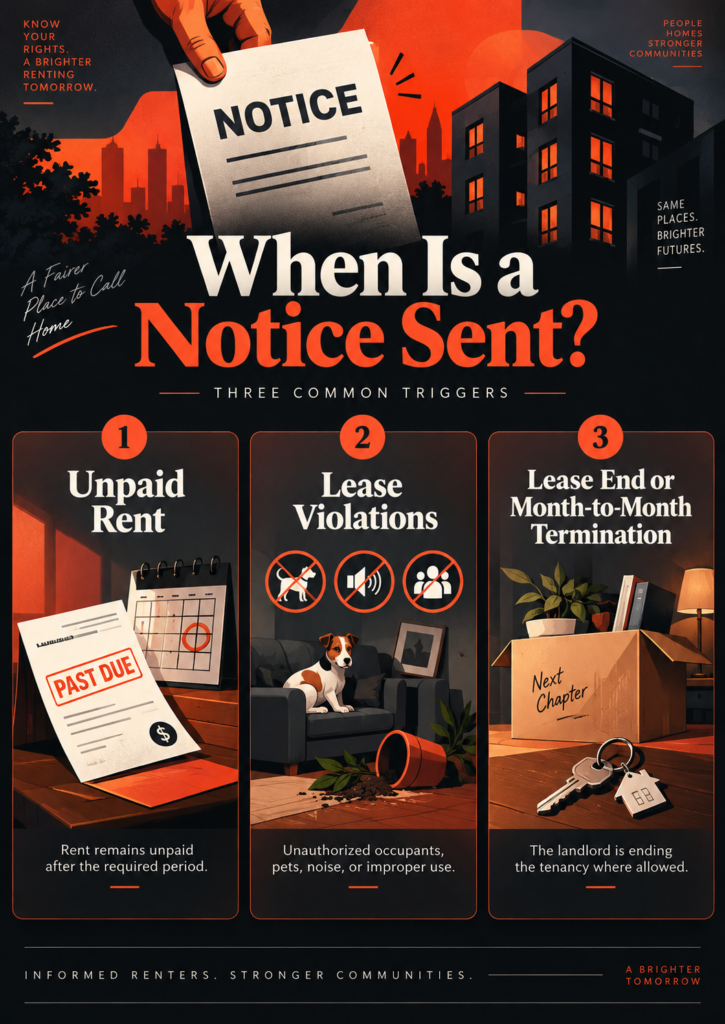
When Is a Notice Commonly Sent?

The most common reason for sending a notice is unpaid rent.

A tenant misses the due date, any applicable grace period passes and the balance remains unpaid. Depending on local law and the lease, the landlord may then send a notice requiring the tenant to pay the amount due or leave the property.

Some states provide tenants with a right to cure nonpayment by paying within the notice period. In other places, the rules may depend on whether the landlord accepts partial payment, whether a prior notice was sent or whether the property participates in a subsidized housing program.

A notice may also be sent because of a lease violation. Common examples include unauthorized occupants, unapproved pets, repeated noise complaints, prohibited activity, improper property use or failure to maintain the home as required by the lease.

When the violation can reasonably be corrected, the tenant may receive a cure or quit notice. This type of notice generally gives the tenant a limited period to stop or correct the violation. If the problem is corrected properly and on time, the tenancy may continue. If the tenant does nothing or repeats the conduct, the landlord may be able to move forward with eviction. 

Not every violation comes with a right to cure. Serious criminal activity, violence, substantial property damage or conduct threatening the safety of others may be treated differently under state law. Landlords should be especially careful in these situations because emergency circumstances, police involvement and local legal standards can affect the correct procedure.

A notice may also be required when a lease expires or a month-to-month tenancy is being terminated. This is sometimes referred to as a no-fault termination because the landlord is not necessarily accusing the tenant of wrongdoing. The landlord may want to sell the property, move into it, complete major renovations or simply end the rental relationship where the law permits.

However, no-fault terminations are among the areas where state and local rules vary significantly. Some jurisdictions require a specific reason, relocation assistance or a longer notice period. Others give landlords broader authority to end periodic tenancies. A lease expiration also may not automatically authorize removal if local protections apply.

Why the Notice Comes Before Court

The notice period serves several practical and legal purposes.

First, it gives the tenant a final opportunity to resolve the matter without litigation. A tenant who receives a formal notice may pay the balance, remove an unauthorized occupant, correct a lease violation or voluntarily move out.

That outcome may be better for everyone. The landlord regains compliance or possession without paying filing fees, attending court or waiting for law enforcement to enforce a judgment. The tenant may avoid an eviction filing that could make future housing more difficult to obtain.

Second, the notice clearly identifies the problem. Informal conversations can easily become disputed. A landlord may remember discussing unpaid rent on Monday, while the tenant remembers being told that payment could wait until Friday. A properly written notice removes some of that uncertainty by identifying the reason for the demand and the applicable deadline.

Third, the notice supports procedural fairness. An eviction lawsuit affects a person’s right to remain in their home. The notice gives the tenant warning that the landlord intends to pursue possession and provides time to respond, cure the issue when allowed or seek legal assistance.

Finally, the notice satisfies a condition that courts often expect the landlord to complete before filing. A landlord may have a strong underlying complaint and still lose or delay the case by using the wrong notice.

Attorney and housing advocate Mark Melton has pointed out that an eviction defense may exist when “the landlord didn’t follow the required steps leading up to an eviction filing.” 

For landlords, that statement should be taken seriously. The court will not always overlook a procedural error simply because rent was unpaid or the lease was violated. The landlord generally carries the responsibility of showing that the correct process was followed.

The Notice Is Not Permission to Remove the Tenant

One of the most important distinctions for a landlord to understand is the difference between terminating a tenancy and physically recovering possession.

A notice may terminate the tenant’s right to remain after the stated deadline, depending on applicable law. It does not normally authorize the landlord to personally remove the tenant.

If the tenant remains after the notice period expires, the next step is generally to file the appropriate eviction or possession action in court. The case may be called an eviction, unlawful detainer, forcible detainer, summary process or another local term.

The tenant is then served with court documents and receives an opportunity to respond or appear. If the landlord proves the case and receives a judgment for possession, the court may issue a writ, warrant or similar order. An authorized law enforcement officer then carries out the physical removal if the tenant still refuses to leave. 

Landlords should not attempt to skip these steps by changing the locks, removing doors, shutting off utilities, taking the tenant’s belongings or using threats to force the tenant out. These actions are commonly referred to as self-help eviction and are prohibited or heavily restricted in residential tenancies across much of the country. A landlord who uses self-help may face damages, penalties, attorney fees or an order restoring the tenant to possession. 

Even a tenant who clearly owes rent is generally entitled to the legal process required in that jurisdiction.

What Should the Notice Include?

There is no universal notice form that works in every state. Still, a legally sufficient notice commonly addresses several basic points.

It should correctly identify the tenant or tenants, the rental property and the landlord or party demanding possession. It should clearly state why the notice is being given. If money is owed, the amount should be calculated carefully and should not include charges that cannot legally be demanded in that type of notice.

The notice should state exactly what the tenant must do. That may mean paying a specific amount, correcting a violation, stopping prohibited conduct or vacating the property.

It should also provide a clear deadline based on the legally required notice period. Calculating that deadline may involve rules concerning weekends, holidays, the day of service and the method used to deliver the document.

The wording should be direct, professional and free from personal attacks. A notice is not the place to vent frustration or argue about the tenant’s character. Stick to the lease, the facts and the required demand.

Whenever a state or court-approved form is available, landlords should strongly consider using it rather than creating a notice from scratch. The correct form may change depending on the reason for termination, so confirming that the form matches the situation is essential.

Delivery Matters as Much as the Words

A perfectly written notice may still fail if it is delivered incorrectly.

State laws may permit personal delivery to the tenant, delivery to another qualified occupant, posting at the property, mailing or a combination of methods. Certain jurisdictions require certified mail or proof of mailing. Others allow posting only after personal delivery has been attempted.

Email and text messages may be useful for ordinary communication, but landlords should not assume they satisfy formal service requirements. Even if the tenant replies and acknowledges receiving the message, the law may require another delivery method.

Landlords should document service carefully. Keep a copy of the completed notice, photographs if posting is permitted, mailing receipts, delivery confirmations and a written record identifying who served it and when.

The landlord may later need to testify about those details. Depending on local court procedures, the person who delivered the notice may also need to complete an affidavit or proof of service.

Common Mistakes That Cause Problems

One of the most frequent mistakes is using the wrong notice period. A landlord may rely on a generic online form without realizing that the state, county or city requires more time.

Another mistake is naming only one tenant when several adults signed the lease. The notice may also identify the property incorrectly, omit an apartment number or demand charges that do not belong in the notice.

Some landlords file the eviction before the full notice period has expired. Others accept rent after sending the notice without understanding whether that payment cancels, waives or alters the notice.

Landlords may also use the wrong type of notice. A notice for unpaid rent is not necessarily appropriate for an unauthorized pet, and a notice to cure may not be the correct document for ending a month-to-month tenancy.

Retaliation and discrimination are additional concerns. A landlord should not use the eviction process to punish a tenant for reporting unsafe conditions, exercising a legal right or making a protected complaint. Federal fair housing law also prohibits housing discrimination based on protected characteristics, and state or local laws may protect additional groups.

A Notice Can Still Open the Door to Resolution

Sending a notice does not always mean the landlord has decided that eviction is unavoidable.

Sometimes it brings urgency and clarity to a situation that has drifted for too long. A tenant may arrange payment, provide a move-out date or agree in writing to correct the problem. The parties may create a repayment agreement or negotiated surrender of the property.

Landlords should document any agreement that changes the notice or pauses the eviction process. A casual verbal promise can create confusion about whether the landlord agreed to extend the deadline or accept a different payment arrangement.

Any agreement should explain what each party must do, when it must happen and what occurs if the agreement is not honored. Where permitted, the landlord may also want the agreement reviewed by an eviction professional before relying on it.

Treat the Notice as the Beginning of the Case

The safest approach is to assume that every notice may eventually be examined by a judge.

That mindset encourages the landlord to verify the lease, confirm the balance, review local requirements, use the correct form and preserve proof of delivery. It also encourages calm, professional communication.

The notice to vacate is not merely a warning letter. In many cases, it is the procedural bridge between a lease problem and the landlord’s right to ask a court for possession.

When it is prepared correctly, the notice gives the tenant a fair opportunity to respond and gives the landlord a clearer path forward. When it is prepared carelessly, it can turn an otherwise valid eviction into a longer and more expensive dispute.

For private landlords and real estate professionals, the lesson is simple. Do not rush the notice because you are eager to reach the courthouse. The notice is part of the courthouse process, even though it is usually delivered before the case is filed.

Disclaimer: This article is intended for general educational purposes only and is not legal advice. Eviction procedures, notice periods, required language and service methods vary by state and may also be affected by county or city ordinances, the lease, subsidized housing rules and the facts of the case. Before issuing a notice or filing an eviction, consider speaking with a licensed eviction attorney, experienced property manager or other qualified eviction professional in the jurisdiction where the property is located.